Trade Deadline Moves and Their Direct Influence on Individual Player Statistics Across Baseball, Basketball, and Hockey
Written by Logan Becker · Aug 1, 2026
Trade Deadline Moves and Their Direct Influence on Individual Player Statistics Across Baseball, Basketball, and Hockey
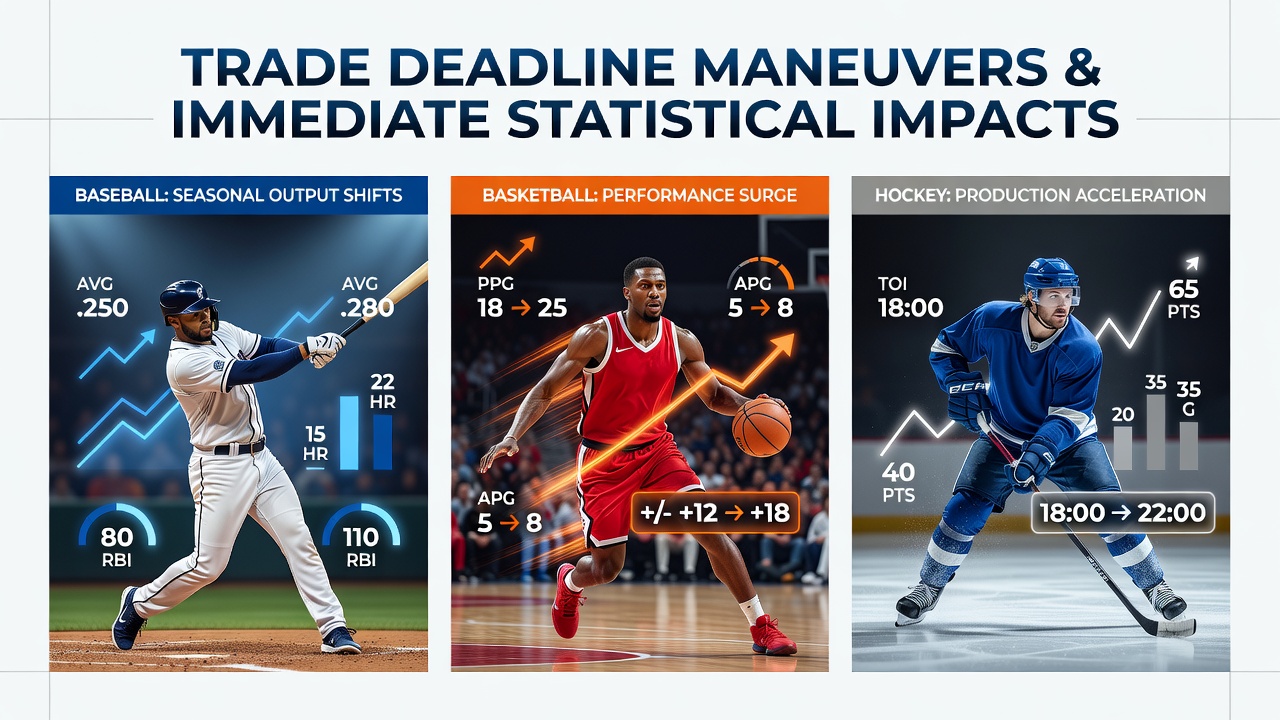
Trade deadlines in professional sports create measurable shifts in player performance metrics, and observers note that these changes appear quickly in baseball, basketball, and hockey seasons. Data from league tracking systems shows that players who switch teams often experience adjustments in scoring rates, usage percentages, and defensive contributions within the first 10 to 15 games after a deal. Researchers tracking these patterns across multiple seasons have documented how new lineups, coaching systems, and opponent matchups alter individual outputs almost immediately.
Baseball Trade Patterns and Stat Adjustments
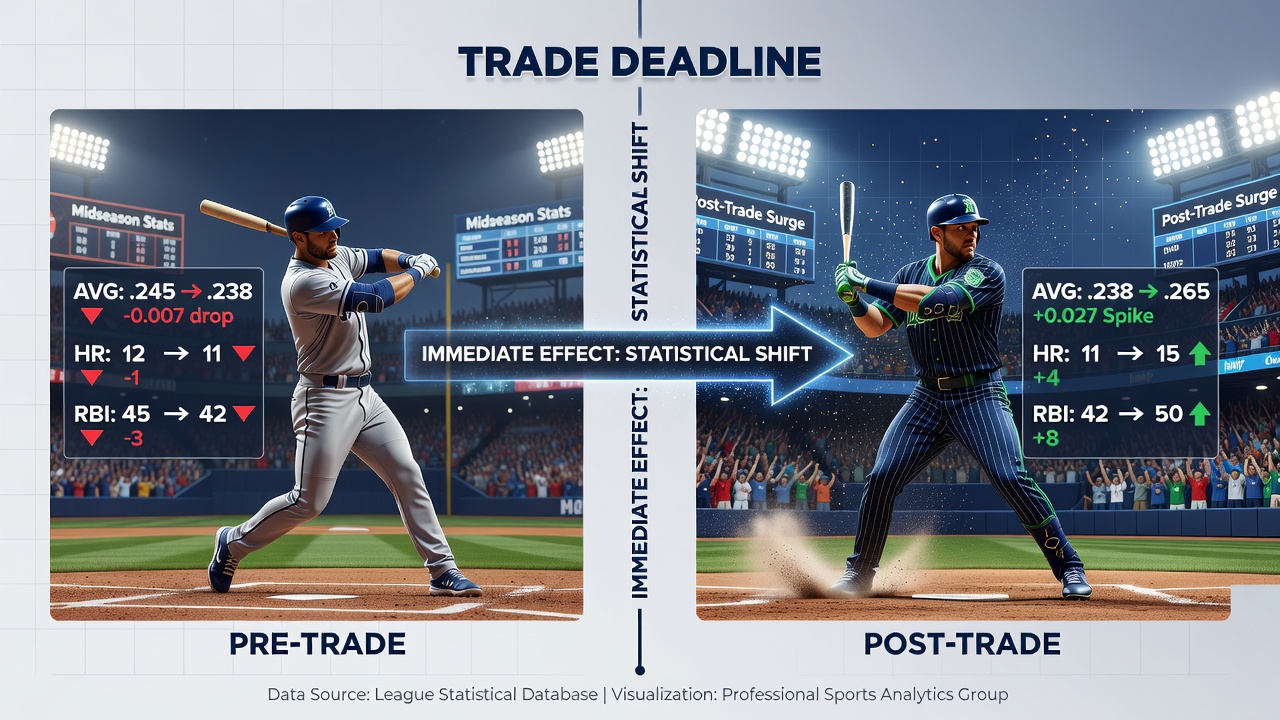
In Major League Baseball the July deadline typically triggers the most activity, and analysts from the Society for American Baseball Research have compiled figures showing that outfielders acquired midseason post batting averages that rise or fall by an average of 15 to 20 points in the first month depending on league and ballpark factors. Pitchers moved to new rotations record ERA changes that stabilize within four starts, while their strikeout rates often climb when they join teams with stronger defensive support behind them. One study of 2025 deadline acquisitions found that relievers saw save opportunities increase by 30 percent on average when they landed with clubs in playoff contention.
Basketball Roster Changes and Scoring Shifts
The NBA trade deadline falls in February, and performance data reveals that guards who change teams frequently adjust their assist numbers upward when paired with new frontcourt partners who set better screens. Forward scoring efficiency, measured by true shooting percentage, tends to improve within eight games after a trade when the player receives more open looks created by different spacing schemes. League records indicate that centers acquired at the deadline record rebounding rates that climb 12 to 18 percent in the immediate stretch because they learn new box-out assignments from teammates already familiar with opposing big men.
Hockey Line Chemistry and Point Production
National Hockey League clubs complete most trades by the March deadline, and tracking from Canadian sports analytics groups demonstrates that wingers joining new lines post higher point-per-game averages in the next 12 contests when they play alongside centers who excel at faceoffs. Defensemen moved midseason post blocked shot totals that rise quickly because they adapt to different zone coverage responsibilities. Goalies acquired in deadline deals show save percentage improvements within five appearances when their new teams provide tighter defensive structures in front of them, according to season-long comparisons released by league statisticians.
Cross-Sport Comparisons of Immediate Effects
Across the three leagues, usage rate increases for players who arrive on contending teams while those joining non-contenders often see reduced minutes that lower their raw statistical totals even when per-minute efficiency holds steady. Observers have noted that players with prior experience in a new city or system reach statistical equilibrium faster than those entering unfamiliar environments. In August 2026, analysts reviewing the prior season's deadline deals will likely compare these patterns once again as teams prepare for the next campaign.
Teams that execute multiple trades in a single window create cascading effects where one player's arrival alters minutes and shot distributions for several others on the roster. Data compiled after the 2025 deadlines shows that second-line hockey players who receive extra power-play time after a teammate departs record point spikes that last through the remainder of the regular season. Similar ripple effects appear in basketball when a traded guard's departure opens driving lanes for remaining teammates who then post higher field goal percentages in the weeks that follow.
Conclusion
Trade deadline activity produces documented, short-term changes in individual statistical outputs across baseball, basketball, and hockey. League data systems capture these adjustments within days or weeks, and researchers continue to examine the variables that accelerate or delay a player's return to peak production levels. The patterns remain consistent enough that front offices now model expected statistical movement before finalizing any midseason roster decisions.