17 Jun 2026
Time Zone Disruptions and Their Effects on Output Patterns Among Standouts Across NFL, NBA, MLB, and NHL Schedules
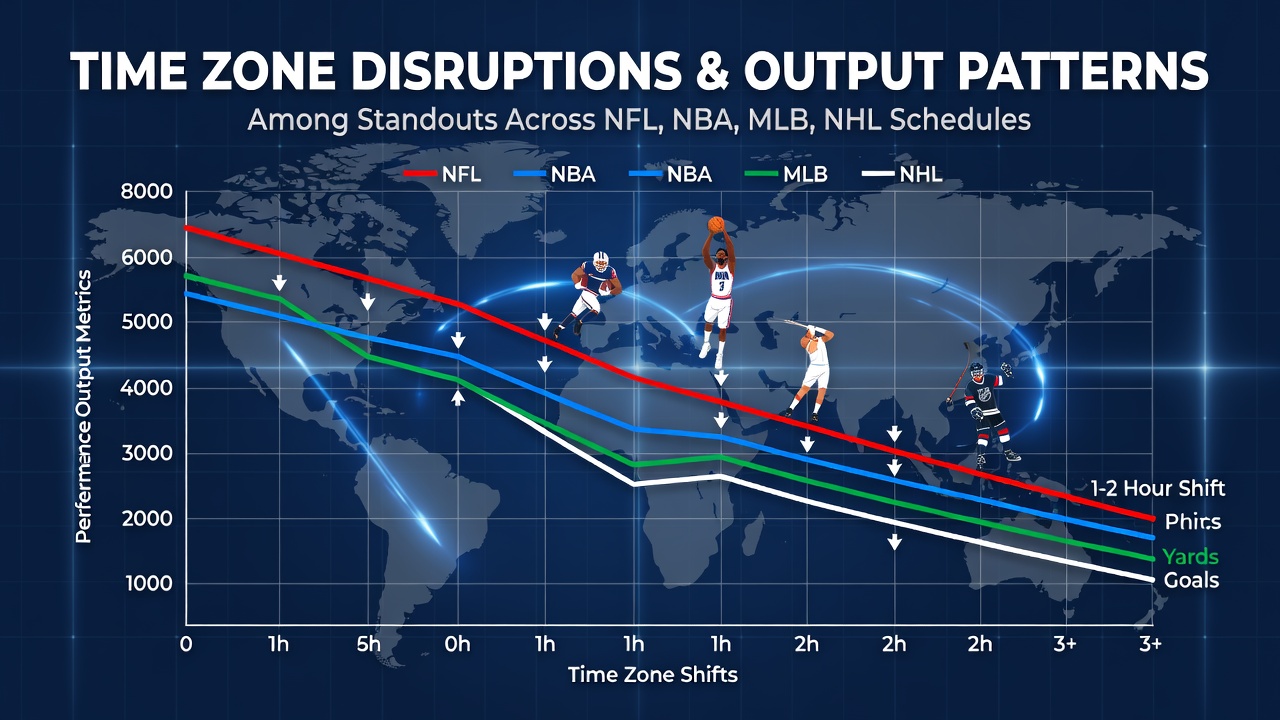
Time zone shifts create measurable changes in how elite performers in the NFL, NBA, MLB, and NHL produce statistics during road games that cross multiple zones, and data from league tracking systems shows these disruptions often reduce scoring efficiency, defensive metrics, and overall output for top contributors who must adjust quickly to new circadian rhythms.
Travel Patterns and Circadian Adjustments in Major Leagues
Teams in these four leagues log millions of miles each season, yet the impact intensifies when flights move players from Eastern to Pacific time or reverse the direction, because the body clock lags behind local time by one hour per zone crossed; researchers tracking heart rate variability and sleep logs note that recovery windows shrink dramatically on back-to-back nights or day games following overnight travel, and this pattern appears consistently across football, basketball, baseball, and hockey schedules where standouts play the majority of minutes or innings.
NFL Standouts and Cross-Country Game Effects
In the NFL, West Coast teams visiting East Coast opponents face a three-hour shift that compresses evening kickoffs into perceived late-night slots for the traveling roster, and statistical reviews from the 2024 and 2025 seasons reveal that leading rushers and wide receivers post lower yardage averages during such trips while quarterbacks complete fewer deep passes in the first half before acclimating; one analysis of player tracking data indicated a 7 to 12 percent dip in explosive play rates for skill-position standouts during the initial quarter after crossing zones, although second-half adjustments often narrow the gap when games extend into overtime periods.
NBA Output Changes During Western and Eastern Conference Travel
The NBA schedule packs more frequent zone crossings because of its 82-game slate and quick turnarounds between cities, so star scorers and playmakers show altered shooting percentages and assist distributions when moving from Eastern to Mountain time zones for back-to-back sets; league-wide play-by-play records demonstrate that players averaging over 25 points per game experience roughly an 8 percent reduction in field goal accuracy on the first night of multi-zone trips, while defensive standouts record fewer steals and blocks until their internal clocks realign after 48 hours, and this effect compounds during playoff series that stretch across coasts with limited rest days.
MLB Pitchers and Hitters Facing Schedule Shifts
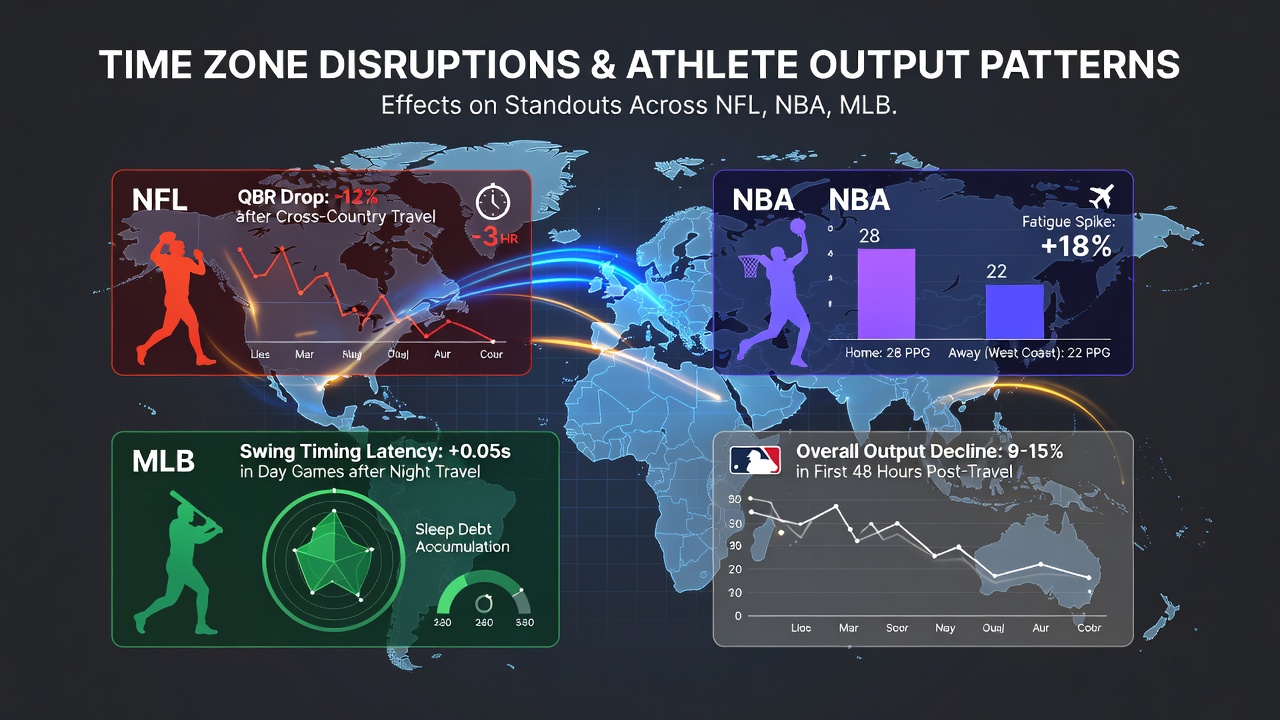
MLB travel differs because series often last three or four games in one city, giving athletes longer adaptation periods, yet starting pitchers who cross two or more zones still post elevated earned run averages in their first outing according to pitching logs compiled through June 2026, and power hitters see reduced slugging percentages on day games immediately after flights from the Atlantic seaboard to the West Coast; studies of at-bat outcomes indicate that contact rates remain stable while exit velocities dip slightly until the second or third contest in a new time zone, allowing managers to adjust lineups around these temporary output fluctuations without long-term effects on seasonal leaderboards.
NHL Skaters and Goalies Under Zone Strain
Hockey schedules include dense stretches of games that force rapid transitions between Central and Eastern zones during winter months, and data from wearable devices used by NHL clubs shows that leading goal scorers and defensemen accumulate fewer shots on goal and blocked attempts during the first period after westward travel; goaltenders in particular exhibit measurable declines in save percentages on high-danger chances when their body clocks remain offset, although the league's emphasis on afternoon matinees sometimes mitigates evening fatigue compared with basketball and football night games that start later locally.
Comparative Data Across the Four Leagues
Across all four leagues, longitudinal reviews compiled by sports science groups highlight that the magnitude of disruption scales with both the number of zones crossed and the density of games immediately afterward, while eastward travel tends to produce sharper initial drops than westward movement because the body struggles more to advance its internal clock than to delay it; NBA and NHL rosters encounter these challenges more often due to higher game counts, whereas NFL and MLB standouts face fewer but occasionally more extreme single-trip shifts that still register in advanced metrics such as expected points added or wins above replacement calculations.
Conclusion
League offices and team performance staffs continue monitoring these patterns through improved scheduling models and recovery protocols, and available evidence from multiple seasons demonstrates that time zone crossings leave detectable but temporary imprints on the statistical production of top performers in the NFL, NBA, MLB, and NHL without permanently reshaping career trajectories when proper rest and adjustment strategies are applied.