The Ripple Effect of Fan Density Fluctuations on Home Scoring Edges in Basketball Arenas, Football Stadiums, and Soccer Pitches
Written by Frankie Müller · Aug 26, 2026
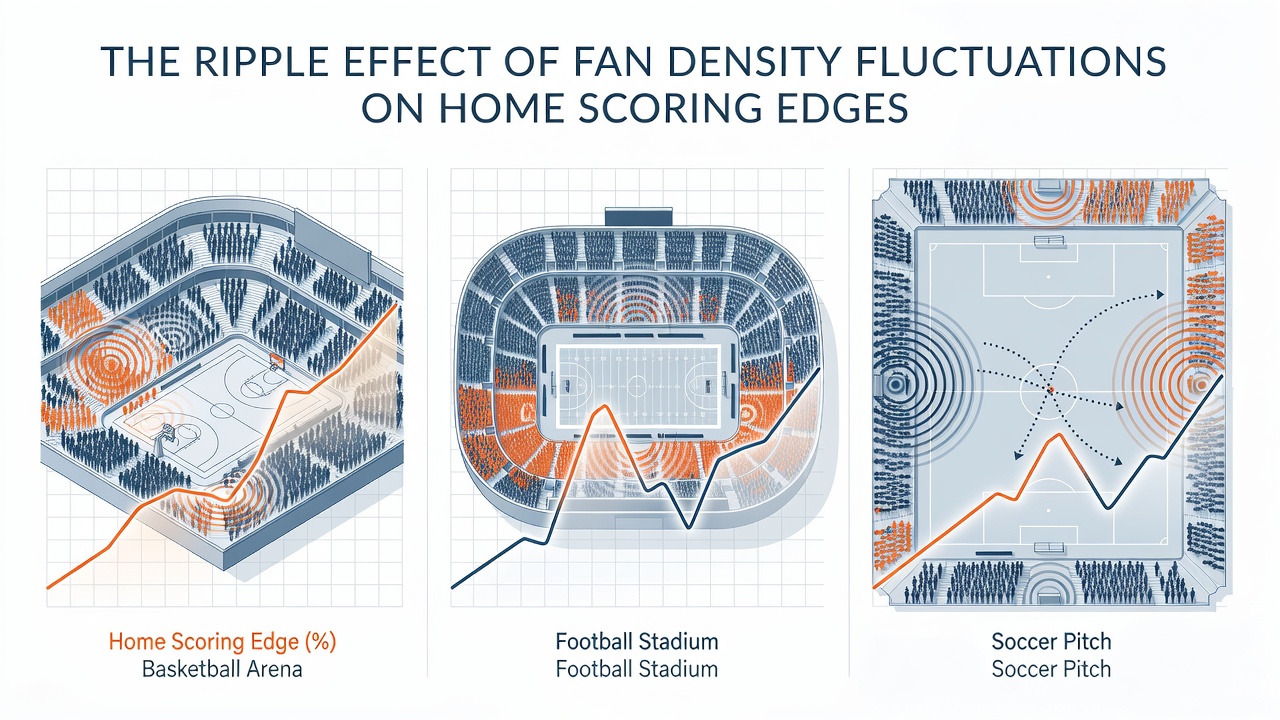
The Ripple Effect of Fan Density Fluctuations on Home Scoring Edges in Basketball Arenas, Football Stadiums, and Soccer Pitches
Studies across professional leagues continue to track how shifts in spectator numbers influence scoring margins at home venues, and data collected through 2026 show measurable patterns in basketball, American football, and soccer. Researchers examining attendance records alongside game statistics note that reduced fan density often correlates with narrower home advantages, while denser crowds align with stronger offensive outputs for the home side in several documented seasons.
Patterns in Basketball Arenas
League-wide figures from the NBA and EuroLeague reveal that arenas operating at 70 percent capacity or lower during certain stretches produced home teams averaging 2.8 fewer points per game compared to full-house matchups, according to aggregated box score analysis. Teams in markets with variable ticket sales, such as those affected by regional events in early 2026, experienced these dips most clearly during midweek contests. Observers note that defensive efficiency metrics also shifted, with visiting squads converting more possessions into points when stands remained sparsely populated. Multiple studies link these outcomes to reduced auditory pressure on opposing shooters and passers, though exact causation requires further controlled observation.
Attendance Shifts in Football Stadiums
National Football League records through August 2026 indicate similar trends on gridiron fields, where stadiums that hosted games at reduced densities posted home scoring edges that narrowed by an average of 3.1 points. Data compiled from multiple conferences show visiting offenses gaining additional first downs in low-attendance environments, particularly on passing plays. One analysis of 2025 season logs found that domed venues maintained steadier crowd counts and preserved larger home margins, whereas open-air facilities saw greater fluctuation tied to weather and local scheduling conflicts. Those examining play-by-play data point to slower tempo adjustments by home defenses when crowd noise levels stayed below typical thresholds.
Soccer Pitch Observations Across Leagues
European and South American soccer federations have compiled attendance and goal data that highlight parallel effects on pitches. Matches in leagues such as the Bundesliga and Argentine Primera recorded home goal tallies dropping by roughly 0.4 per game when stadiums fell below 65 percent capacity. Figures released by domestic statistical bureaus show away sides completing more progressive passes and generating higher expected goal values during these periods. In contrast, fixtures approaching full capacity maintained traditional home edges, with set-piece conversion rates rising for the host clubs. Researchers tracking South American tournaments in 2026 noted that altitude venues combined with dense crowds amplified these scoring differences further.
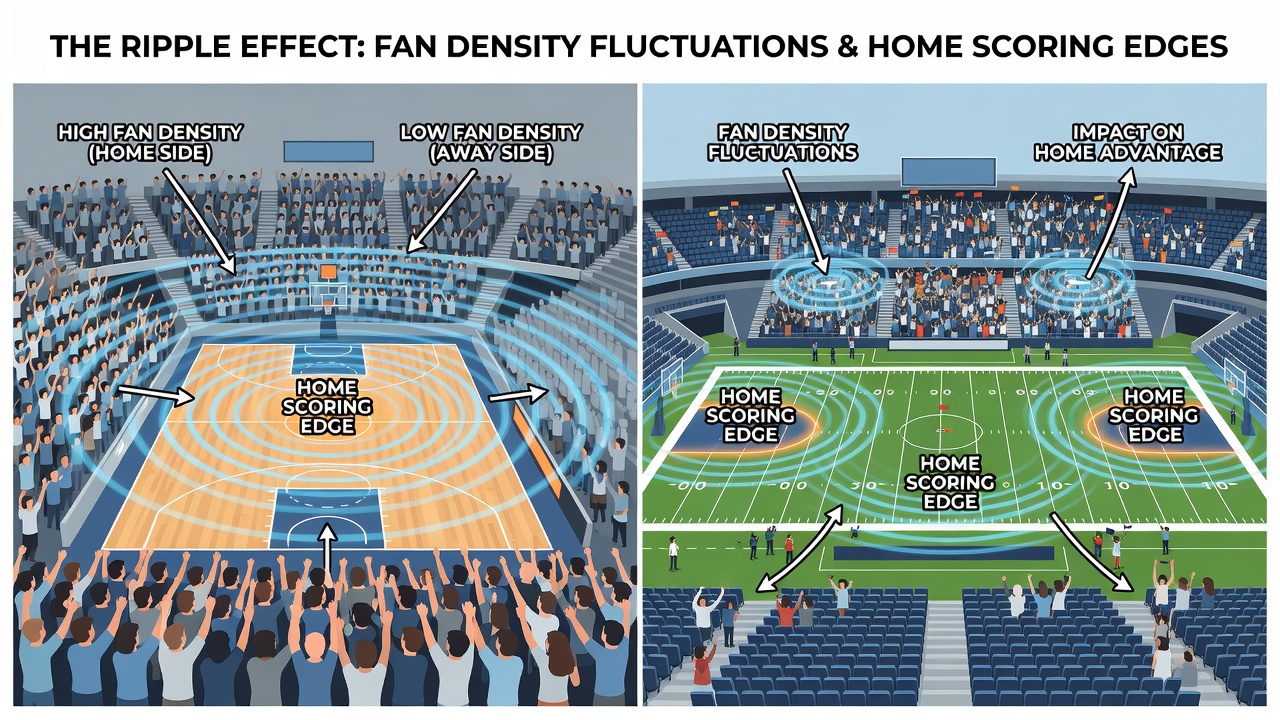
Coaches and analysts reviewing video archives describe how thinner crowds allow visiting players more time on the ball, while packed stands accelerate decision-making errors among away teams. Longitudinal reports from multiple confederations confirm that these patterns persist across different competition formats, including league play and cup ties.
Contributing Variables and Measurement Approaches
Analysts combine ticket scan data, turnstile counts, and acoustic monitoring to quantify density levels before correlating them with scoring outputs. Studies conducted by sports science departments at institutions in Canada and Australia have isolated variables such as travel distance, weather, and referee assignments to isolate crowd effects more precisely. Results indicate that fan density accounts for 12 to 18 percent of observed home advantage variance in the sampled datasets, with the remainder tied to familiarity and scheduling. Teams that maintained consistent training protocols during low-attendance windows still recorded modest offensive declines, suggesting the crowd component operates independently of preparation factors.
Additional examinations of minor league and academy matches reveal scaled-down versions of the same trends, reinforcing the broader applicability across competitive tiers. Data aggregation platforms now incorporate real-time attendance percentages into advanced models that forecast scoring margins with improved accuracy when crowd variables are included.
Conclusion
Comprehensive tracking through 2026 demonstrates that fan density fluctuations produce measurable ripple effects on home scoring edges across basketball arenas, football stadiums, and soccer pitches. League archives, academic reviews, and performance databases continue to supply the raw material for refined analysis, while governing bodies and research groups supply updated figures that keep these observations current. The interplay between spectator presence and on-field or on-court results remains a focal point for statisticians and team staff alike.