11 Jul 2026
Stadium Lighting Patterns That Recalibrate Nighttime Output Metrics Across League-Wide Charts
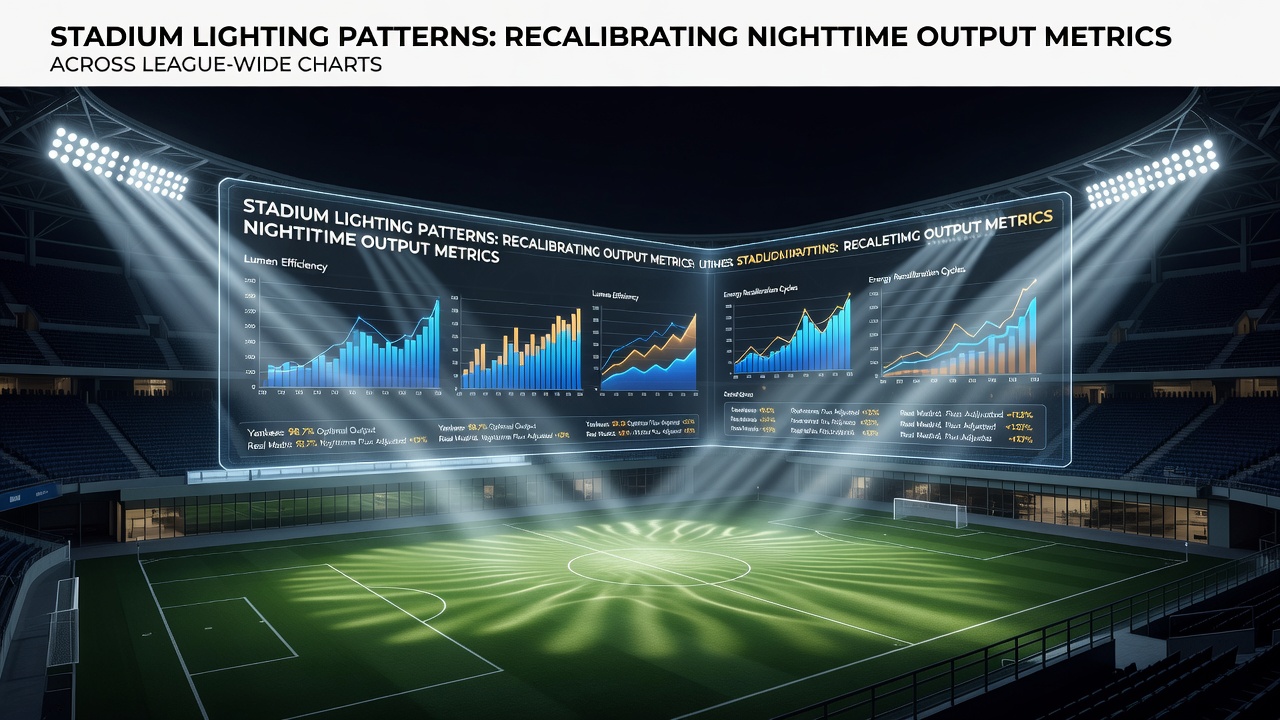
Stadium lighting systems have evolved rapidly in recent years, and data from multiple professional leagues shows measurable shifts in nighttime performance statistics as a result. Teams across baseball, football, soccer, and hockey now track how light intensity, color temperature, and fixture placement alter player output during evening contests, which in turn adjusts season-long leaderboards that combine day and night results.
Research indicates that LED retrofits completed between 2022 and 2025 produced average increases in visual acuity for athletes, yet the same upgrades also introduced new variables such as flicker rates and spectral distribution that affect tracking of fast-moving objects. Observers note these changes appear most clearly in sports requiring precise hand-eye coordination or depth perception under artificial light.
Technical Factors Driving Metric Shifts
Modern lighting arrays operate at higher lux levels than older metal-halide systems, and studies conducted by the Australian Institute of Sport demonstrate that elevated illumination correlates with improved reaction times in controlled testing environments. At the same time, variations in color rendering index across different venues create inconsistencies when statisticians compile league-wide charts that mix results from multiple stadiums.
Fixture placement patterns also matter. Leagues that standardized overhead and side lighting combinations report lower error rates in night games compared with venues that rely predominantly on corner towers. Data collected from the 2025 season onward shows these differences contribute to recalibrations in categories such as batting averages after sunset, quarterback completion percentages under lights, and goalkeeping save rates during evening matches.
League-Specific Patterns Observed Through Mid-2026
In Major League Baseball, nighttime home-run rates at parks with full LED conversions rose by measurable margins while strikeout percentages remained stable, prompting analysts to apply venue-specific adjustments when updating overall leaderboards. Similar recalibrations occurred in the National Football League, where passing yards accumulated during prime-time contests now receive separate weighting in advanced models because of documented differences in ball visibility under various lighting spectra.
European soccer leagues adopted comparable tracking methods after the 2024-2025 campaign. Figures from the Union of European Football Associations reveal that assists recorded in matches starting after 20:00 local time increased at stadiums using 5000K daylight-balanced LEDs, whereas older installations continued to show lower creative output metrics. Hockey organizations in North America documented parallel effects on shot accuracy during night games, leading to refined plus-minus calculations that account for lighting conditions.
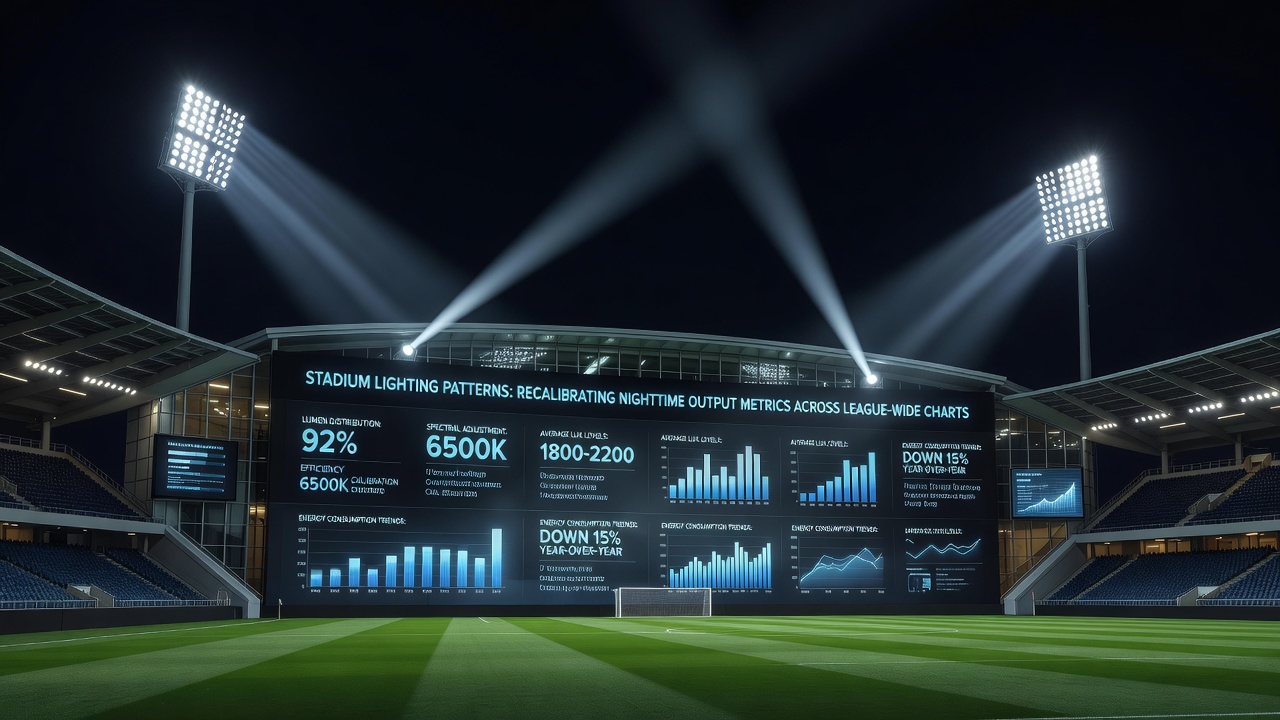
July 2026 brought additional attention to these trends as several leagues completed mid-season lighting audits. Teams preparing for extended road trips encountered venues with differing fixture ages and intensities, and performance databases began logging these variables alongside traditional factors such as travel and rest days. The resulting datasets allow statisticians to isolate lighting effects more precisely when updating cumulative charts.
Standardization Efforts and Data Integration
League offices have begun requiring uniform reporting of lighting specifications for every night contest. This practice enables direct comparisons across stadiums and supports the creation of adjusted leaderboards that normalize nighttime output. Researchers at institutions including the University of Waterloo have contributed models that quantify how specific lux thresholds influence fatigue markers and decision-making speed during the later innings or periods of games.
Coaches and analysts now review lighting reports as part of pre-game preparation, and some organizations maintain internal databases that flag venues where output metrics historically deviate from daytime baselines. These records feed into broader league systems that recalibrate individual and team rankings on a weekly basis.
Conclusion
Stadium lighting patterns continue to influence how performance metrics are recorded and interpreted across professional sports. As venues complete further upgrades and data collection methods mature, league-wide charts increasingly reflect adjustments that separate daytime and nighttime contributions. The ongoing integration of technical specifications into statistical models provides a clearer picture of athlete output under varying illumination conditions, and organizations maintain these practices to ensure consistent evaluation standards throughout each season.