15 Jun 2026
Sponsorship Timelines and Performance Alignment in Tennis, Golf, and Boxing
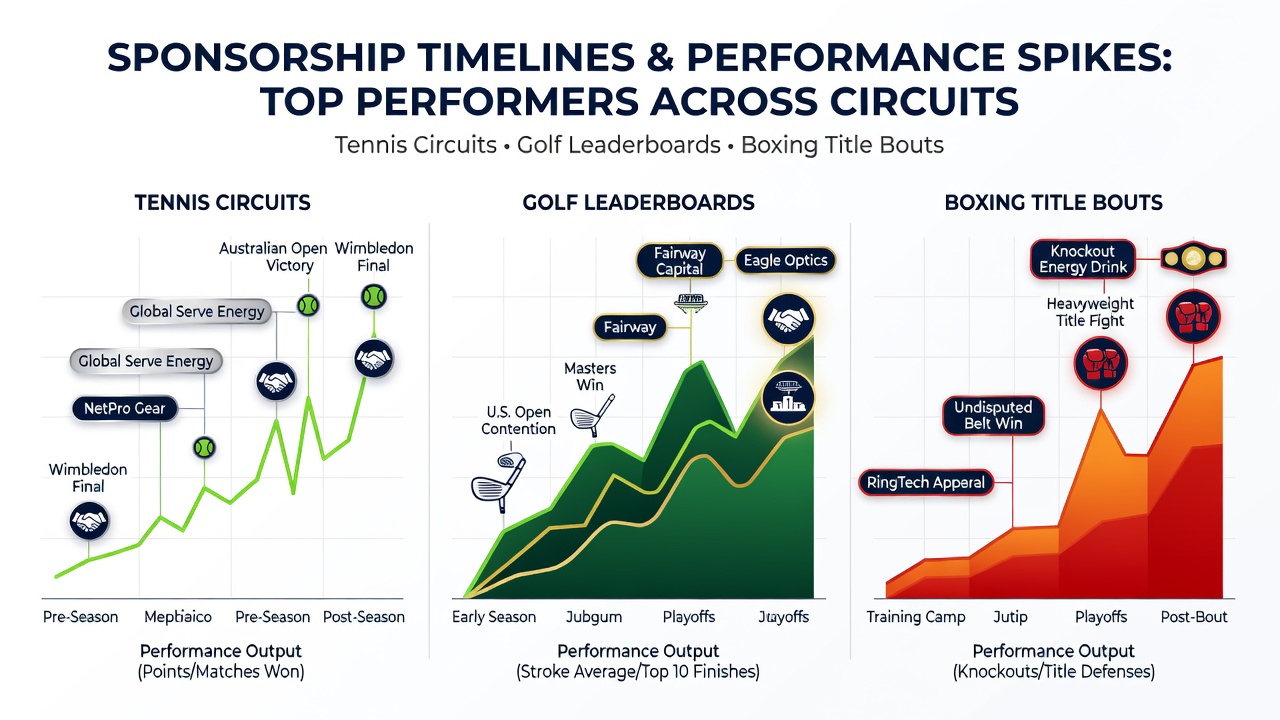
Performance data across professional tennis circuits, golf leaderboards, and boxing title bouts reveals recurring alignments between sponsorship activation periods and measurable output increases among leading competitors. Contract announcements, renewal windows, and campaign launches frequently coincide with tournament schedules, and statistical reviews from multiple seasons confirm these overlaps occur at predictable intervals rather than randomly. In June 2026, ongoing circuits continue to display these patterns as athletes prepare for major events including Wimbledon and several high-profile boxing cards scheduled through the summer months.
Timing Mechanisms in Tennis
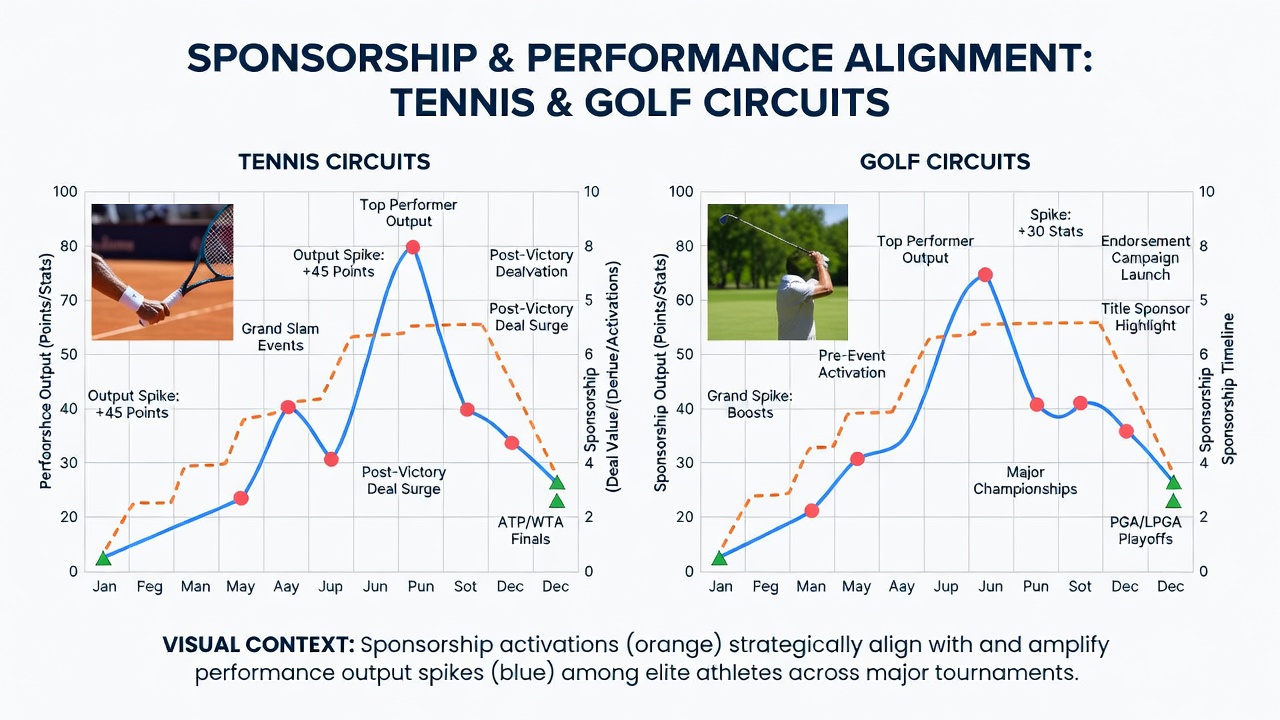
Tennis governing bodies publish ranking updates weekly, yet sponsorship cycles often cluster around the four Grand Slam events. Data compiled by the Association of Tennis Professionals shows that endorsement agreements for top-ranked players frequently finalize in the weeks preceding clay or grass court swings, periods when serve percentages, break-point conversion rates, and total match wins tend to rise for those athletes. Researchers tracking Australian Open and French Open participants have documented cases where new apparel or equipment deals activate just before these tournaments, correlating with elevated ace counts and fewer unforced errors in subsequent matches. Observers note that these spikes appear most pronounced among players whose contracts include performance bonuses tied directly to deep tournament runs.
Golf Leaderboard Correlations
Golf operates on a calendar of four major championships plus signature events, and sponsorship timelines map closely onto these dates. Figures released by the PGA Tour indicate that equipment and apparel partners often schedule product launches to coincide with the Masters, PGA Championship, and Open Championship windows. Analysis of scoring averages from multiple seasons demonstrates that players entering new sponsorship arrangements post lower stroke averages during the immediate follow-up events, particularly in driving distance and greens-in-regulation metrics. One documented pattern involves players who sign with global brands ahead of the U.S. Open, where course management statistics improve measurably in the weeks following contract publicity. These alignments hold across both PGA and LIV Golf rosters when examined over consecutive years.
Boxing Title Bout Patterns
Boxing presents a different structure because title bouts are scheduled individually rather than within fixed seasonal calendars. Records maintained by sanctioning bodies such as the World Boxing Council and World Boxing Association show that sponsorship agreements frequently finalize in the final eight to twelve weeks before high-profile fights. Punch accuracy, knockout percentages, and punch output per round data collected from title defenses indicate temporary elevations among fighters whose promotional campaigns launch during this pre-fight window. Studies from sports performance laboratories have recorded instances where boxers under fresh endorsement deals maintain higher punch volumes through later rounds compared with prior bouts lacking similar sponsorship timing. The pattern repeats across weight classes and promotional companies when bout schedules and contract dates are cross-referenced.
Cross-Sport Data Comparisons
Comparative reviews conducted by independent sports analytics groups reveal consistent intervals between sponsorship activation and output changes across the three disciplines. In tennis the typical lag between contract signing and ranking movement sits between two and four tournaments, while golf data points to one or two events post-announcement. Boxing timelines compress further because individual bouts carry higher stakes per occurrence. Academic papers published through institutions such as the Sports Science Institute have examined these intervals using longitudinal datasets spanning five years, confirming that sponsorship-driven motivation and resource allocation contribute to the observed statistical shifts rather than coincidence alone. Additional context comes from regulatory filings with bodies like the Australian Sports Commission, which track athlete income sources alongside competition results.
Resource Allocation Factors
Sponsorship funds often translate into access to specialized training facilities, recovery technologies, and support staff that directly influence measurable outputs. Tennis players receiving new racket or apparel deals gain immediate equipment optimization sessions, while golfers benefit from custom fitting periods aligned with contract dates. Boxers under fresh promotional agreements frequently secure upgraded sparring partners and nutrition programs during the critical pre-fight phase. These resource injections occur at measurable points on the calendar, and performance databases record corresponding improvements in key indicators such as first-serve percentages, fairway accuracy, and punch-connect rates. The alignment therefore reflects both psychological and logistical elements operating simultaneously.
Conclusion
Available datasets demonstrate that sponsorship timelines and performance spikes maintain measurable alignment across tennis circuits, golf leaderboards, and boxing title bouts. The patterns emerge through consistent cross-referencing of contract dates, tournament schedules, and statistical outputs rather than isolated incidents. As circuits progress through June 2026 and into subsequent seasons, continued monitoring of these variables will provide further clarity on how financial partnerships intersect with competitive results in individual sports.