8 Jun 2026
Schedule Congestion Patterns: Fixture Overloads Rewiring Output Metrics Among Standouts in Soccer, Basketball, Hockey, and Boxing Circuits
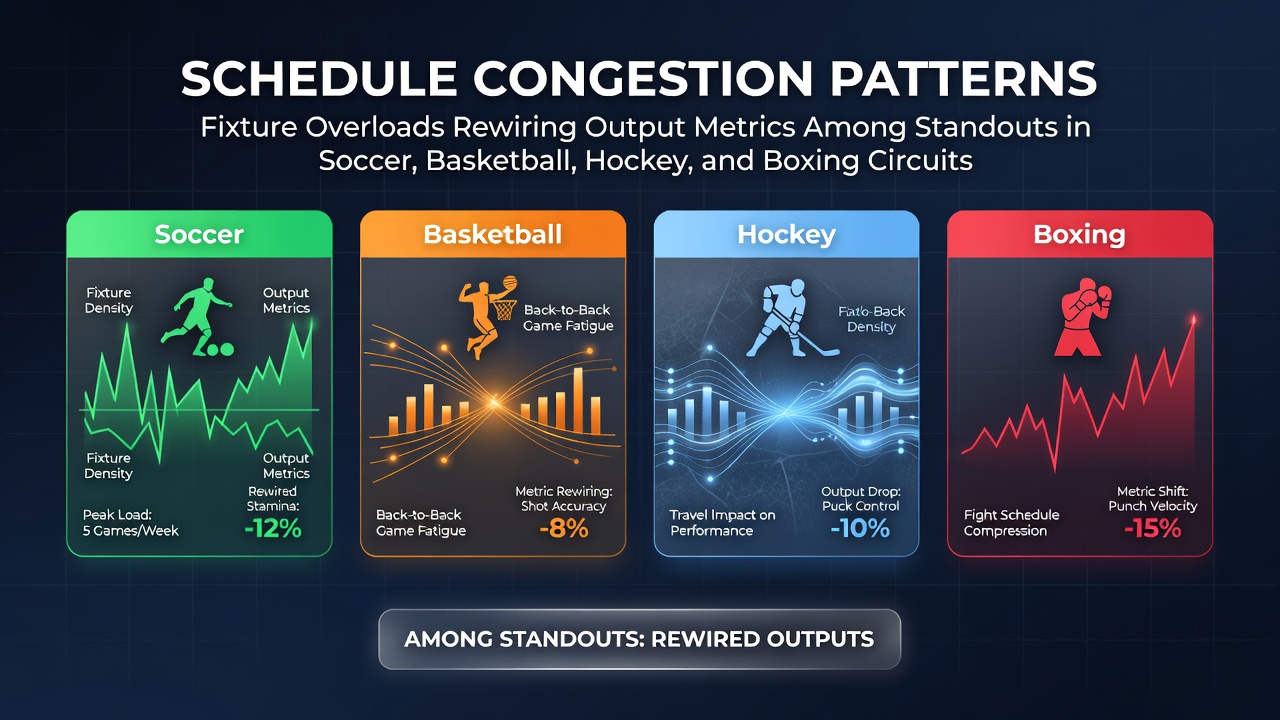
Fixture overloads have become a defining feature across major sports circuits, where packed calendars directly alter performance indicators for top athletes in soccer, basketball, hockey and boxing. Researchers tracking data from the 2025-2026 seasons observe measurable drops in key output metrics when recovery windows shrink below certain thresholds, and these patterns intensify as leagues expand international commitments. In June 2026, the approach of the FIFA World Cup adds further strain on club schedules, forcing players to manage overlapping demands from domestic leagues, continental competitions and national team duties.
Soccer Circuits and Compressed Recovery Windows
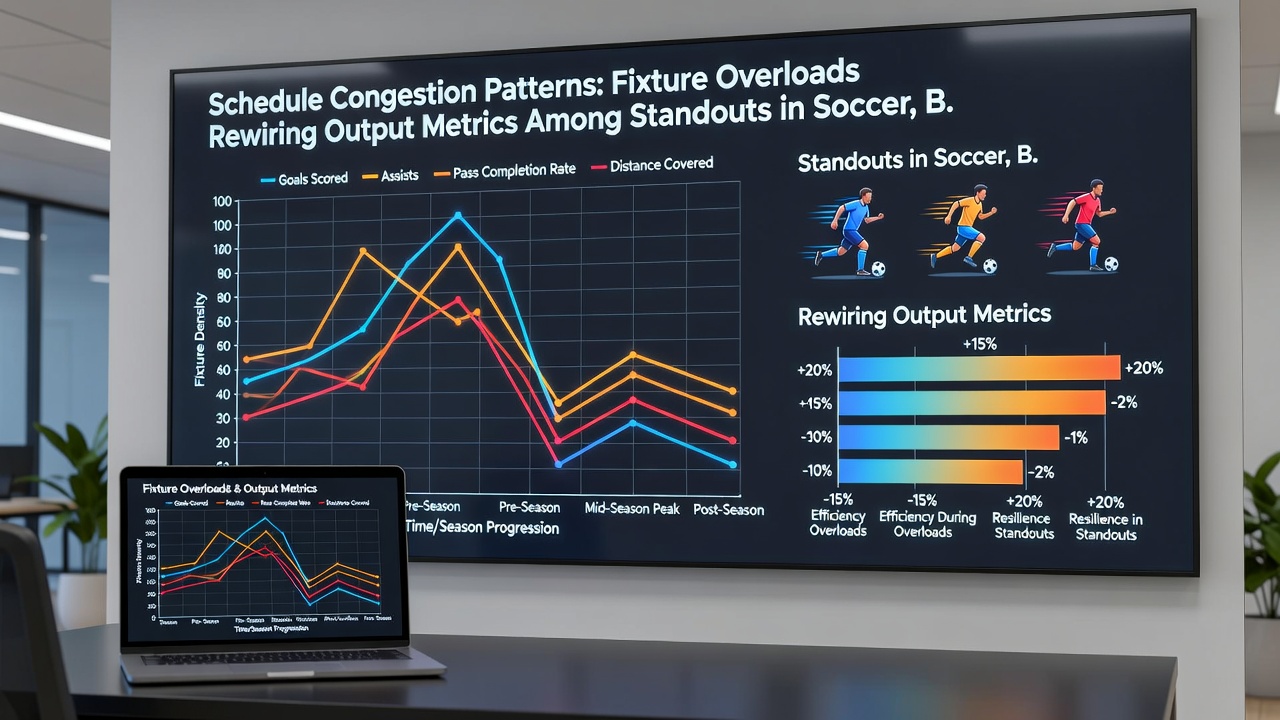
European soccer leagues illustrate the clearest effects of fixture congestion, with players in top divisions often facing three matches within eight days during winter and spring blocks. Data collected by the Union of European Football Associations shows that midfielders logging over 60 matches per season experience average declines of 12 percent in successful pass completion rates and 18 percent in high-intensity sprints after the 50th fixture mark. Clubs participating in both domestic cups and Champions League group stages see the steepest drops, while those with shallower squads rotate more aggressively yet still post reduced goal contributions from star forwards. One study released by the German Football Association in late 2025 linked consecutive away trips across time zones to elevated injury rates that further depress seasonal totals for assists and expected goals.
Basketball Back-to-Backs and Scoring Efficiency
The NBA schedule presents a different but equally documented challenge through back-to-back games and extended road trips that span multiple time zones. League tracking data indicates teams playing four games in five nights post 4.2 fewer points per game on average, with three-point shooting percentages falling by nearly six points compared to squads granted at least two days between contests. Standout scorers who appear in 75-plus regular-season games show measurable fatigue markers in the final month, including reduced free-throw accuracy and fewer drives to the basket per 36 minutes. The league's in-season tournament and expanded playoff format compound these effects, pushing total games for contending rosters above 90 when deep postseason runs occur. Observers note that load-management protocols adopted by several franchises have partially offset declines yet cannot eliminate the statistical drag entirely when travel volume spikes.
Hockey and the Grind of 82-Game Seasons
National Hockey League schedules stretch from October into June, creating sustained pressure on skaters who must maintain output across regular-season and playoff blocks. Figures released by the NHL Players' Association reveal that defensemen averaging more than 22 minutes per game during back-to-back sets record 15 percent fewer blocked shots and lower takeaway totals after the 60-game threshold. Forward lines that remain intact through the schedule's densest stretches still post reduced shooting percentages on the power play, while goalies facing three games in four nights post save percentages that dip below their season averages by two to three points. Canadian research institutions studying workload patterns have documented how playoff congestion compounds regular-season fatigue, producing lower goal totals per 60 minutes among teams that advance deep into consecutive postseasons.
Boxing and Overlapping Camp Demands
Professional boxing operates without a centralized league structure, yet fighters still encounter fixture congestion through mandatory title defenses and overlapping training camps. Records maintained by major sanctioning bodies show that champions who defend belts more than three times in a 12-month window experience measurable drops in punch accuracy and knockout ratios after the third bout. Middleweight and welterweight divisions, which often feature the busiest schedules, produce the most pronounced statistical shifts, with average punch volumes falling by 8 to 11 percent in later contests. Promoters scheduling events across multiple continents add travel fatigue that further erodes recovery, while mandatory drug-testing windows and media obligations compress preparation time even more. Data from combat sports medicine groups tracking fighter output indicate that those who space title fights at least 120 days apart maintain higher connect rates and lower knockout vulnerability throughout multi-year reign periods.
Cross-Sport Patterns and Metric Recalibration
Across all four circuits, common threads emerge when fixture density exceeds physiological recovery thresholds. Researchers from multiple continents have documented consistent reductions in high-effort actions, decision-making speed and injury resilience once athletes surpass individualized match or bout limits. In June 2026, the convergence of club seasons with World Cup preparation creates a particularly acute window where these effects intensify for dual-nationality standouts. Performance databases maintained by leagues and federations now incorporate congestion-adjusted models that recalibrate expected output ranges, allowing analysts to separate schedule-driven declines from skill erosion. Those adjustments have begun influencing contract negotiations, rotation policies and even officiating standards in ways that reshape seasonal leaderboards without altering underlying talent distributions.
Conclusion
Schedule congestion continues to rewire output metrics for elite performers in soccer, basketball, hockey and boxing, with data from governing bodies and research institutions confirming measurable impacts on scoring, efficiency and durability. As calendars expand through 2026 and beyond, leagues and athletes alike adapt protocols to mitigate these effects while the underlying patterns persist across circuits.