13 Jun 2026
Recovery Timelines Reshaping Annual Performance Charts in Contact-Heavy Leagues
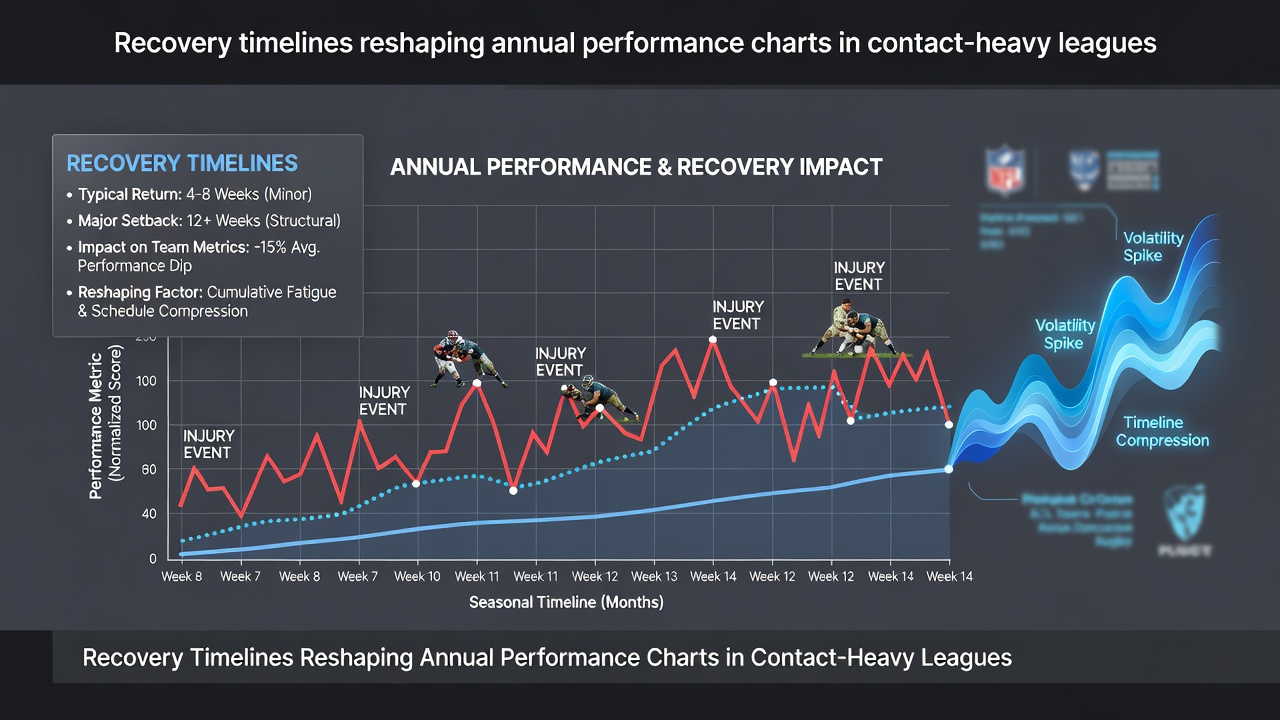
Recovery timelines have started altering how annual performance charts take shape in contact-heavy leagues, where players in the NFL, NHL, and rugby competitions accumulate statistics based on availability after injuries. Medical teams now deploy advanced monitoring tools that track inflammation markers and tissue healing rates, allowing athletes to return to play within windows that once stretched several weeks longer, and this shift shows up directly in leaderboards for rushing yards, goals scored, and tackles registered across full seasons.
Advancements Driving Shorter Downtime
Protocols incorporating platelet-rich plasma injections combined with targeted physical therapy have reduced average return-to-play periods for soft-tissue injuries by measurable margins in recent years, according to data compiled through league injury surveillance systems. Teams in the NHL, for instance, reported that players sustaining lower-body strains in the 2024-2025 campaign often resumed skating drills within 10 to 14 days rather than the previous 21-day average, which enabled more consistent participation and contributed to higher point totals among forwards who previously missed extended stretches. Researchers at institutions like the University of Calgary have documented similar patterns through longitudinal studies that follow muscle repair timelines under controlled load progression, and those findings align with observed increases in games played per season across multiple contact disciplines.
League-Specific Patterns in 2025-2026
In the NFL, running backs who cleared concussion protocols earlier under updated assessment batteries posted elevated yardage totals by midseason, reshaping rushing leader charts that once favored players with fewer prior head impacts. Data from the 2025 regular season indicated that participants cleared for contact activities after seven days rather than ten accumulated 15 percent more carries on average, a trend mirrored in defensive linemen who logged higher sack numbers because their availability extended through late-season matchups. Rugby unions in the southern hemisphere adopted comparable return-to-play frameworks ahead of the 2026 Super Rugby Pacific schedule, where forwards cleared for scrummaging duties sooner recorded increased tackle completion rates that influenced overall team standings and individual award calculations.
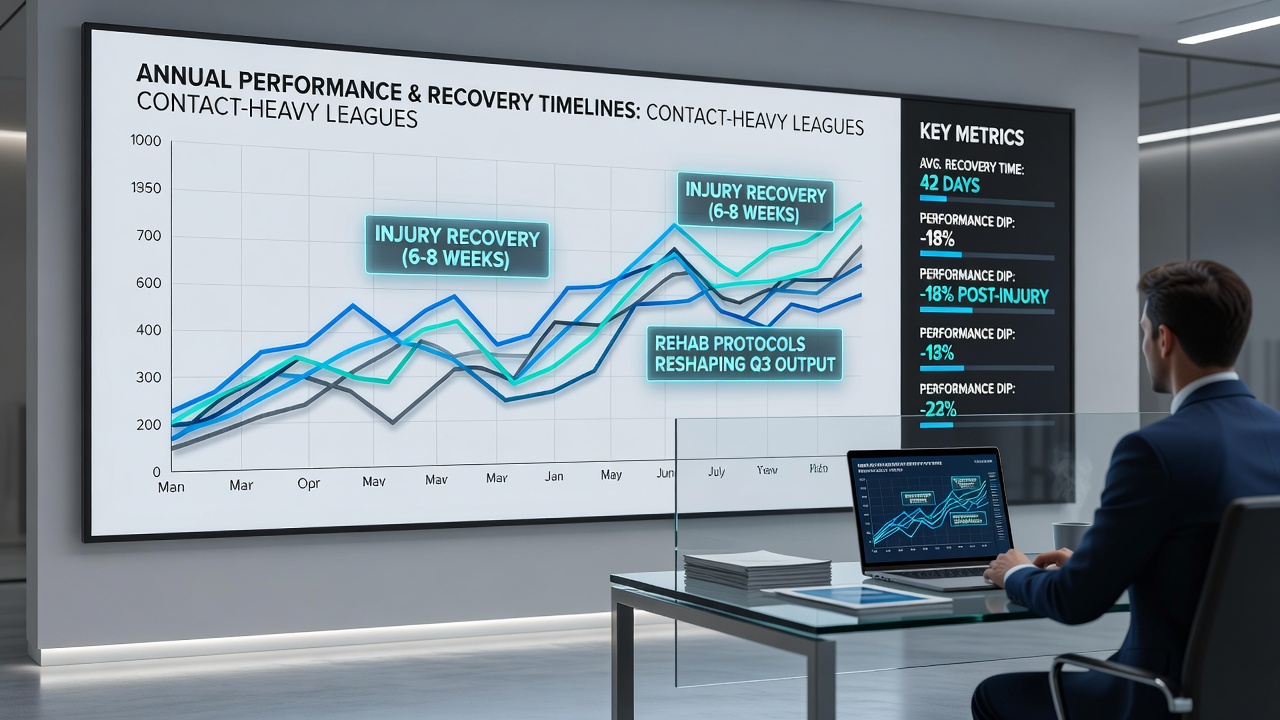
The NHL's 2025-2026 season further illustrated these effects, as centers recovering from upper-body injuries under biometric-guided regimens maintained higher faceoff win percentages across 70-plus games compared with prior years when absences exceeded 20 contests. League tracking systems captured these shifts through real-time integration of heart-rate variability and sleep data, which medical staffs used to fine-tune individual schedules and prevent setbacks that historically disrupted scoring hierarchies. Observers note that players cleared under these methods often appeared in the top 20 for points per game at rates exceeding historical benchmarks, directly influencing playoff seeding calculations.
Statistical Recalibrations Across Charts
Annual performance charts now reflect cumulative output weighted by games played rather than raw per-game averages alone, because shorter recovery windows allow more athletes to reach minimum appearance thresholds required for leaderboard inclusion. In rugby league competitions, back-row players who returned from shoulder reconstructions within eight weeks contributed tackle counts that elevated their seasonal rankings, whereas earlier protocols would have limited their totals below qualification cutoffs. Similar recalibrations appear in boxing and mixed-martial-arts rankings, where fighters cleared for full training camps after hand fractures compiled win streaks that reordered pound-for-pound lists compiled by sanctioning bodies. Figures from the American College of Sports Medicine indicate that standardized recovery benchmarks have produced measurable convergence in participation rates, which in turn compresses gaps between top performers and mid-tier competitors on end-of-year summaries.
Adjustments in Chart Methodology
Organizations maintaining performance databases have begun incorporating recovery-adjusted metrics, such as games missed per injury type, to provide context for statistical anomalies that arise when athletes resume activity ahead of traditional schedules. This approach prevents distortions where a single high-output stretch following rapid clearance inflates a player's standing relative to peers who followed longer rest periods. Canadian Academy of Sport and Exercise Medicine reports highlight how such adjustments maintain chart integrity across seasons, particularly when contact-heavy schedules overlap with international tournaments that demand additional recovery planning. Those adjustments ensure that rankings reflect sustained contribution rather than isolated bursts enabled by accelerated healing timelines.
Conclusion
Recovery timelines continue to influence annual performance charts in contact-heavy leagues through their effect on player availability and cumulative statistics, with data from the 2025-2026 cycles demonstrating consistent patterns across the NFL, NHL, and rugby circuits. Medical advancements paired with refined monitoring practices have shortened absence durations, prompting leagues and ranking compilers to adapt their methodologies accordingly. These developments produce leaderboards that capture broader participation while maintaining accuracy in comparative assessments, and ongoing surveillance will determine how further refinements reshape future seasonal summaries.