Lighting Conditions and Their Subtle Impact on Night Game Statistics Across Outdoor Professional Sports
Written by Logan Becker · Aug 24, 2026
Lighting Conditions and Their Subtle Impact on Night Game Statistics Across Outdoor Professional Sports
Outdoor professional sports have incorporated night games for decades, yet lighting conditions continue to shape performance metrics in measurable ways across baseball, soccer, and other field-based leagues. Artificial illumination introduces variables such as light uniformity, glare, and color temperature that differ from natural daylight, and researchers track these factors against player output in evening contests. Data from multiple seasons shows modest but consistent shifts in statistics when games move under the lights, particularly in visibility-dependent actions like tracking fly balls or judging passes.
Baseball Night Games and Batting Metrics
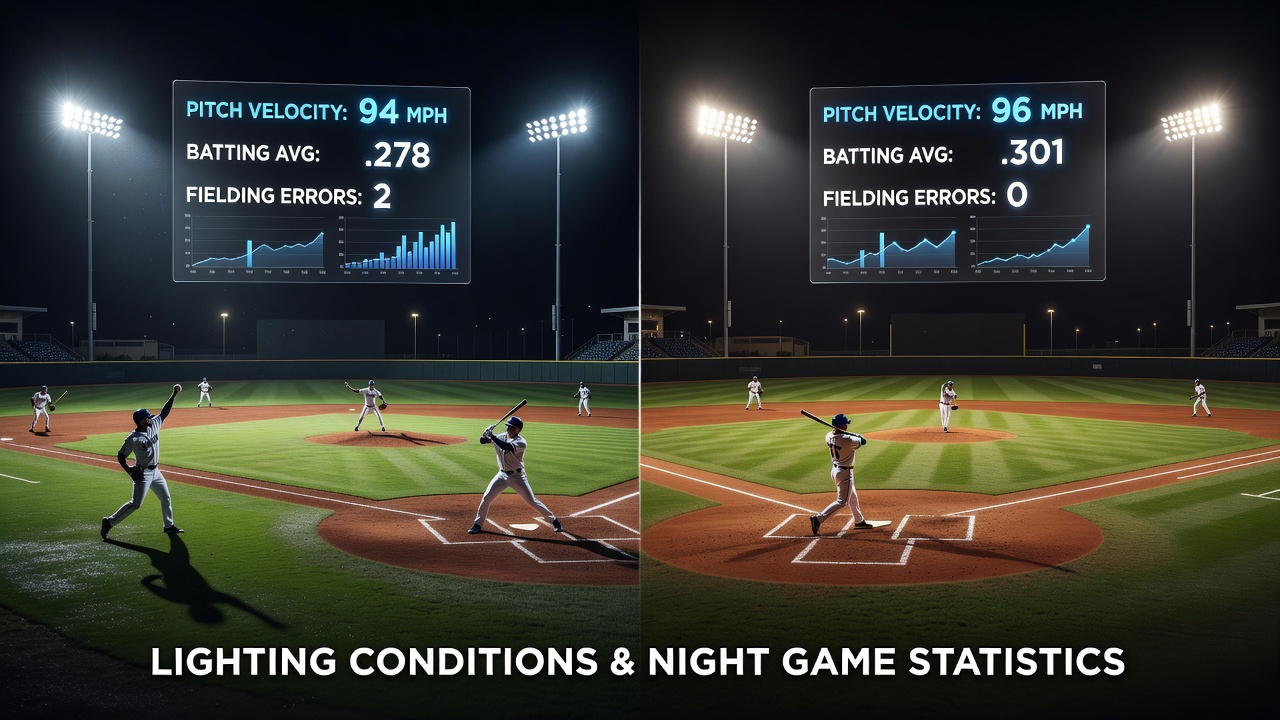
Major League Baseball schedules hundreds of night contests each year, and records indicate that batting averages dip slightly in those environments compared with day games. League-wide figures from recent campaigns reveal on-base percentages falling by roughly two to three points under standard stadium lighting, while strikeout rates rise in several ballparks where light poles create uneven coverage near the outfield corners. Pitchers meanwhile post marginally higher ground-ball percentages, a pattern observers attribute to hitters adjusting swing paths when depth perception changes under mixed sodium and LED arrays.
Stadium-specific designs play a role as well. Venues with newer LED systems deliver more even lux levels across the field, and those parks record fewer outfield errors than older facilities still using legacy fixtures. Analysts note that August 2026 schedules already include extended night series in both leagues, giving teams additional opportunities to compile comparative data before postseason play begins.
Soccer Leagues and Passing Accuracy Under Floodlights
European domestic leagues and international club competitions rely heavily on evening fixtures, and passing completion percentages show measurable variation tied to illumination quality. Matches played under high-uniformity LED systems register slightly higher short-pass accuracy, whereas older installations with noticeable hot spots near the touchlines correlate with increased turnovers. Goalkeepers in leagues that publish advanced tracking data demonstrate marginally lower save percentages on shots from distance when light contrast between the ball and background decreases.
UEFA technical reports track these patterns across multiple competitions, and the data aligns with findings from Australian sports science groups that examined similar variables in domestic A-League night matches. Teams adapt by altering warm-up routines and visual focus drills before kickoff, though the adjustments remain incremental rather than transformative.
Research on Visual and Reaction Factors
Studies conducted by institutions such as the American College of Sports Medicine examine how lighting spectra affect contrast sensitivity and reaction time during high-speed ball tracking. Their published findings indicate that certain LED color temperatures improve ball visibility for some athletes while introducing minor glare for others, depending on individual visual profiles. These laboratory results find echoes in game logs, where night-game error rates in both baseball and soccer cluster around periods when fixtures undergo maintenance or temporary dimming.
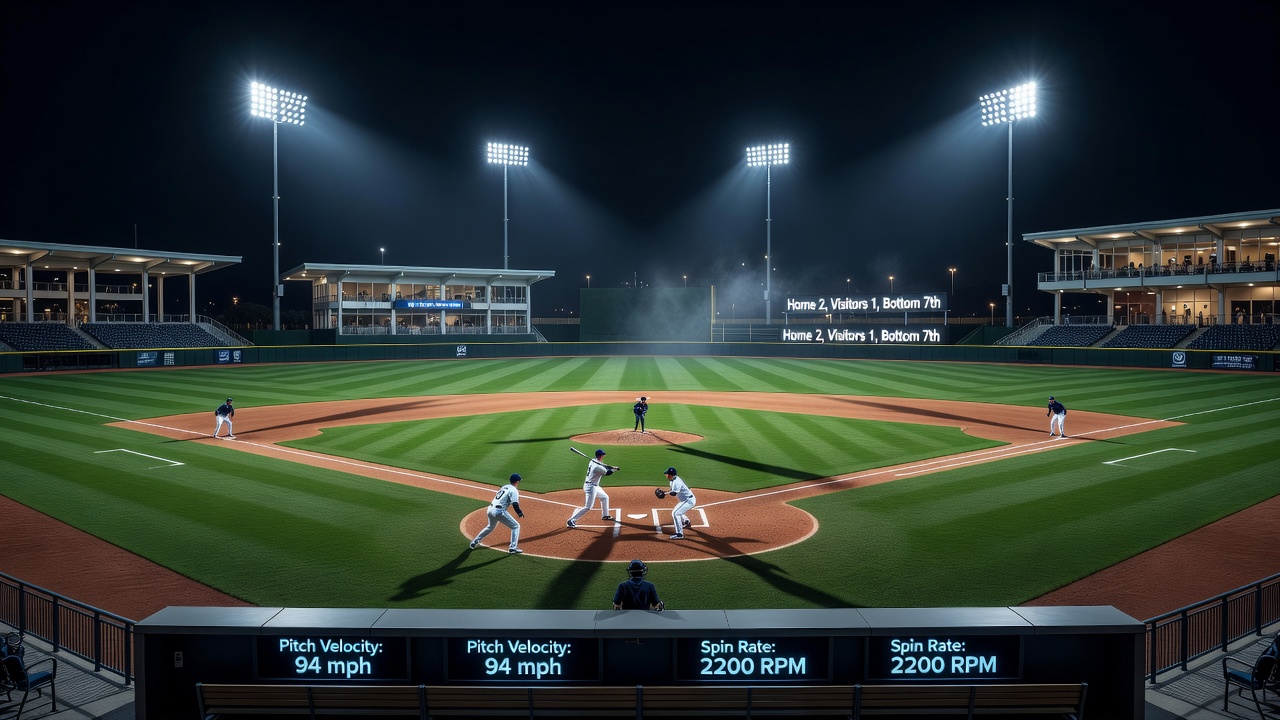
Canadian university researchers have extended this work by correlating in-game biometric readings with lighting audits at professional venues. Their datasets reveal that heart-rate variability and gaze-fixation patterns shift measurably when players move between differently lit zones on the same field, although overall scoring outputs remain within established seasonal ranges.
League Responses and Equipment Adjustments
League offices and stadium operators have responded with incremental upgrades rather than wholesale redesigns. Several MLB clubs installed supplemental infield lighting arrays after internal reviews showed localized dips in batted-ball tracking during twilight transitions. European soccer federations similarly updated floodlight specifications in their competition manuals, requiring minimum lux thresholds and uniformity ratios that clubs must verify before hosting evening matches. These changes coincide with broader adoption of LED technology that offers instant dimming and directional control unavailable in older systems.
Equipment manufacturers have introduced tinted visors and contact lenses designed for artificial light spectra, yet adoption rates vary by position and personal preference. Players who transition between day and night schedules frequently cite the need for additional adaptation periods, particularly when traveling across time zones that compress preparation windows.
Conclusion
Lighting conditions exert a quiet but persistent influence on night-game statistics in outdoor professional sports, and ongoing upgrades plus expanded data collection continue to refine how leagues quantify those effects. August 2026 schedules will add fresh samples to existing datasets, allowing analysts to test whether newer illumination standards narrow the statistical gaps observed in prior seasons. The patterns remain subtle, yet they accumulate across hundreds of contests each year and shape the benchmarks teams use to evaluate performance.