20 Jul 2026
League Expansion Waves and Their Quiet Reshaping of Scoring Distributions Across Hockey Rinks, Baseball Diamonds, and Basketball Courts
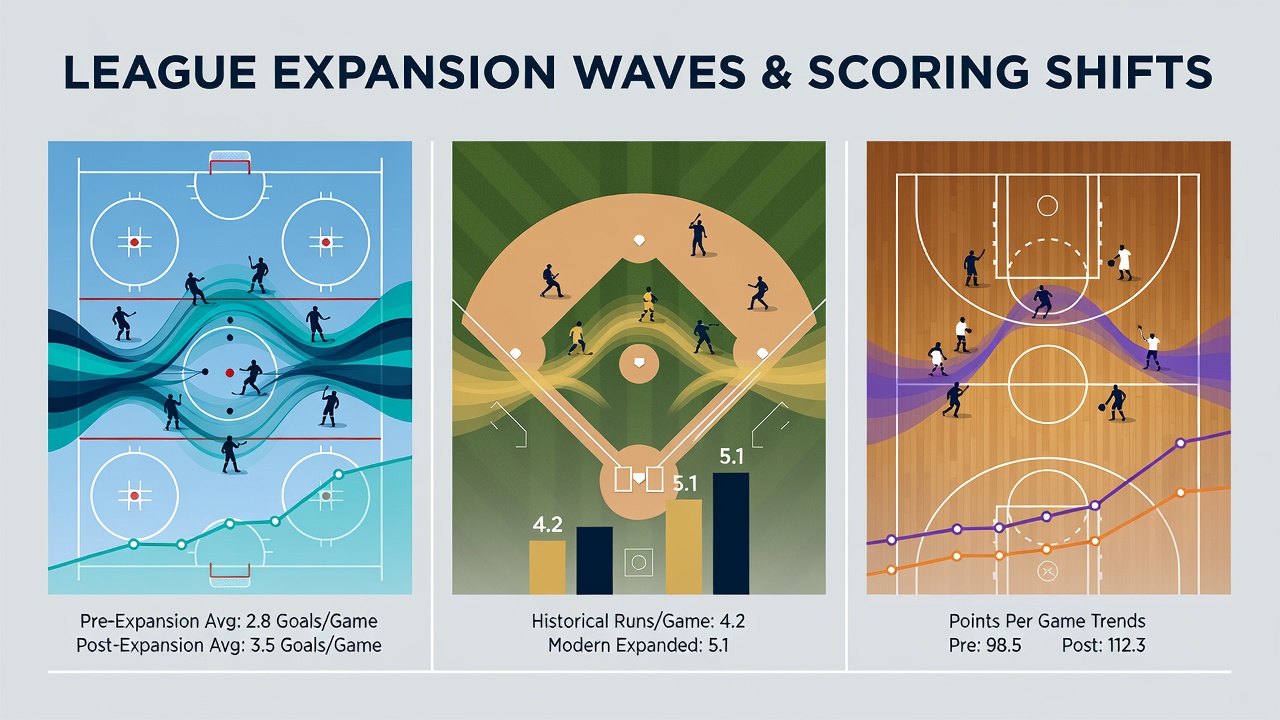
League expansions across professional sports have unfolded in distinct waves since the mid twentieth century, yet observers note that their effects on scoring distributions often emerge gradually through diluted talent pools and altered competitive balances rather than through immediate spikes in points or goals. Data from the NHL, MLB, and NBA reveal patterns where new franchises integrate into existing structures, which in turn redistributes opportunities for scoring among both established and incoming rosters, and these shifts become measurable across multiple seasons as rosters stabilize and coaching adjustments take hold.
Patterns in NHL Expansions and Goal Distributions
Expansions in the National Hockey League since 2017 introduced teams such as the Vegas Golden Knights and later the Seattle Kraken, and figures from league records show that average goals per game rose modestly in the seasons following each addition because the influx of players spread talent across more lineups while creating new matchups that favored offensive plays in certain zones. Researchers at Canadian sports analytics groups have tracked how defensive pairings and goaltending depth thinned initially, which allowed more even strength scoring opportunities to develop in the middle of the ice, and this redistribution persisted even as expansion teams drafted strategically to build competitive cores over time.
By July 2026 additional data releases from ongoing monitoring programs indicated that expansion effects had stabilized scoring variances between conferences, with teams in newly added markets contributing to league wide increases in power play efficiency metrics that reflected broader access to skilled forwards across all thirty two franchises.
Adjustments in MLB and Run Production
Major League Baseball expansions, though less frequent in recent decades, followed similar dynamics when new clubs entered the American and National Leagues, and statistics compiled by organizations such as Baseball Reference demonstrate that run scoring environments shifted as pitching staffs expanded and bullpen usage patterns evolved to accommodate additional games and travel demands. New teams often started with lower win totals in their inaugural seasons, which correlated with elevated offensive outputs from opposing lineups during interleague play, yet these trends moderated as farm systems developed and free agency filled roster gaps in subsequent years.
Analysts have observed that the quiet nature of these changes appears in the gradual flattening of home run distributions across divisions, where expansion diluted the concentration of elite power hitters and spread extra base hits more evenly among everyday players rather than concentrating them on perennial contenders.
NBA Expansions and Point Spread Variations
The National Basketball Association has added franchises at intervals that included the Charlotte Bobcats era and later realignments, and performance data from the league office shows corresponding adjustments in points per game averages as rosters lengthened and bench production became more critical to maintaining scoring consistency throughout eighty two game schedules. Expansion teams initially posted higher opponent point totals because defensive schemes required time to coordinate across larger rotations, which in turn elevated three point attempt rates league wide as spacing improved on offenses facing less experienced defenders.
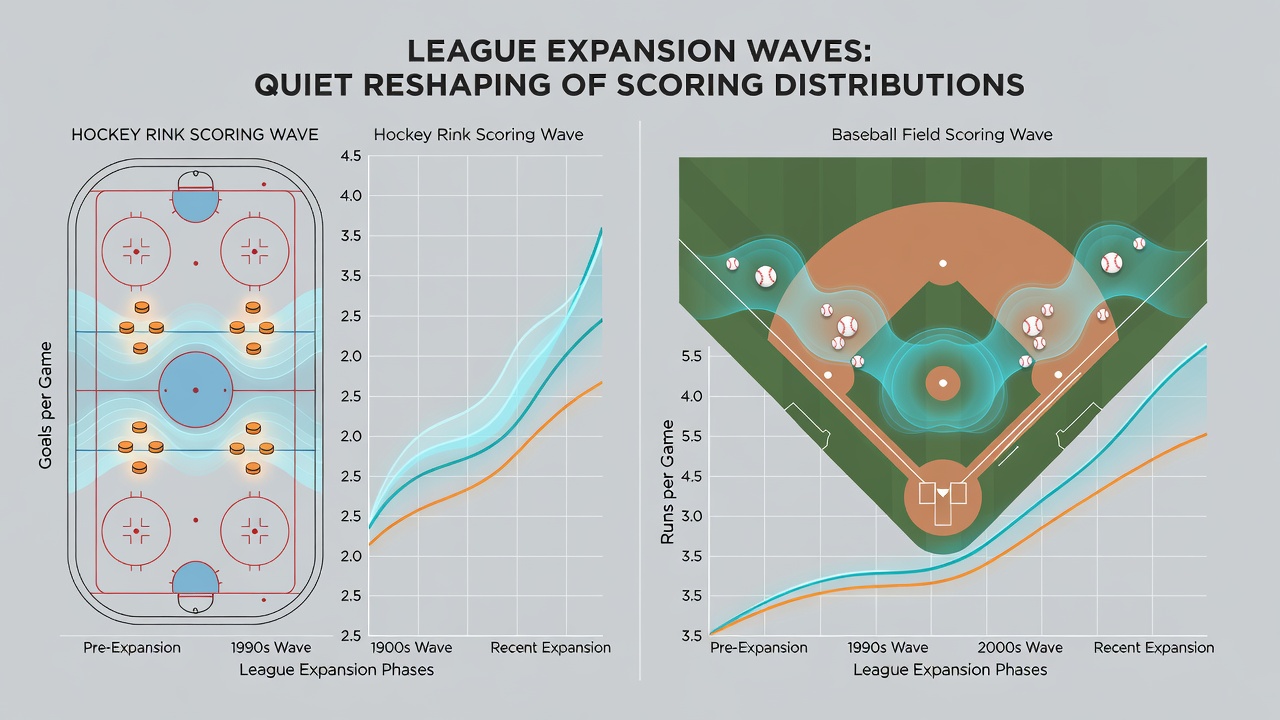
Studies from Australian Institute of Sport researchers who compared North American league data with international benchmarks found that these point distribution changes stabilized after three to four seasons once expansion clubs secured draft picks and developed continuity among core players, resulting in more predictable scoring margins that reflected talent parity rather than temporary imbalances.
Comparative Effects Across the Three Leagues
When viewed together the expansions in hockey, baseball, and basketball illustrate how added teams redistribute scoring without necessarily inflating overall league totals, because the introduction of new opponents creates both opportunities and constraints that balance out over multiple campaigns. For instance defensive specialists drafted by expansion clubs often reduce high danger chances in their home rinks or courts, which counters offensive gains elsewhere, and similar mechanisms operate on baseball fields where pitching depth from new organizations limits extra inning run production that might otherwise spike.
Those who have examined longitudinal datasets note that these quiet reshapings also influence award voting and statistical leaderboards, since individual scoring leaders emerge from a wider pool of contributors rather than from a handful of dominant clubs, and this pattern holds across contact heavy and skill oriented sports alike.
Conclusion
Expansion waves continue to influence scoring distributions in measured ways that reward patient analysis of multi year trends, and the evidence accumulated through 2026 underscores how new franchises integrate without permanently distorting the competitive landscapes of the NHL, MLB, or NBA. Ongoing data collection from league partners and independent research bodies will likely refine these understandings as future waves unfold.