10 Jun 2026
Endurance in Numbers: Multi-Year Consistency Patterns Among Elite Athletes in Football, Tennis, and Golf Circuits
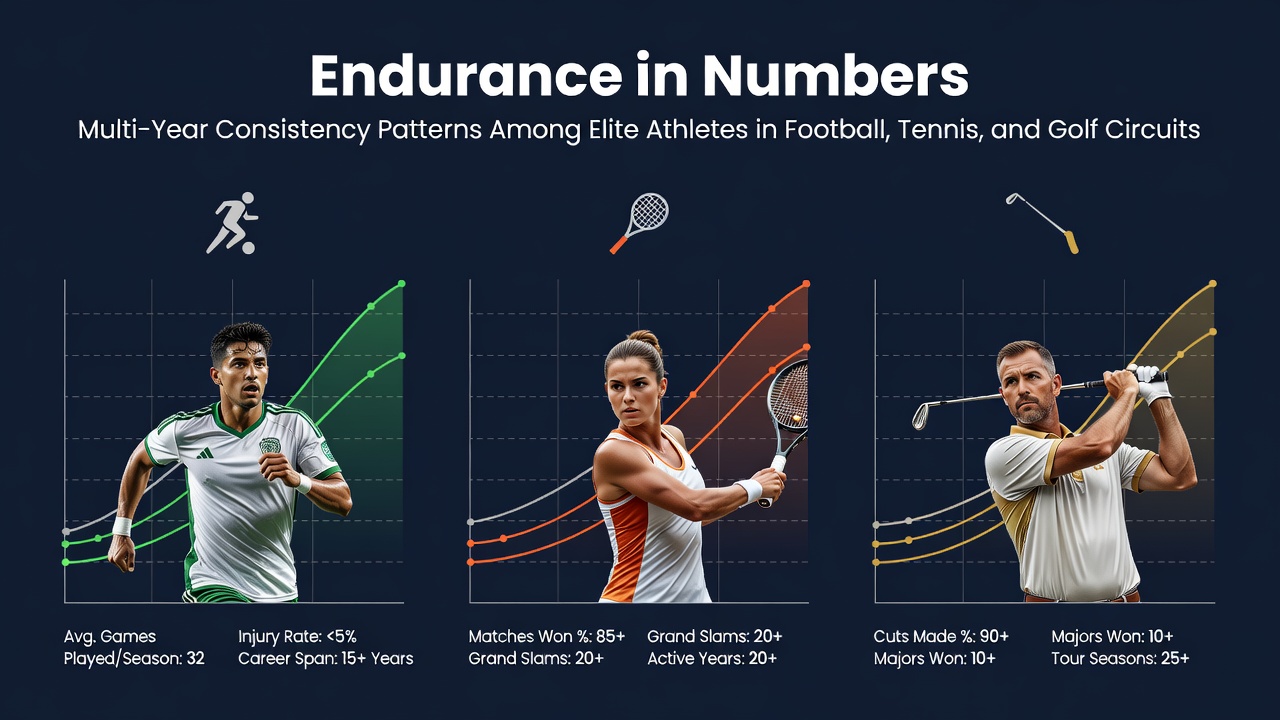
Multi-year consistency among top performers in football, tennis, and golf has drawn attention from analysts who track statistical outputs across extended periods, and data from major governing bodies shows distinct patterns that separate sustained excellence from short bursts of achievement.
Tracking Long-Term Output in Football
Football researchers have examined player metrics from European leagues and international competitions, where midfielders and forwards often maintain goal and assist tallies over five or more seasons when injury rates stay low. League records indicate that participants who log consistent minutes per campaign tend to post stable expected goals figures, and this holds particularly true for those competing in both domestic and continental fixtures. Figures from the 2025-2026 season, extending into June 2026, reveal several established names whose per-90-minute contributions have varied by less than 10 percent across recent years, according to aggregated club reports.
Patterns Emerging in Tennis Circuits
Tennis statisticians review serve percentages, break-point conversion rates, and match-win ratios over multiple Grand Slam cycles, and these metrics highlight athletes who reach deep tournament stages year after year. Surface-specific data collected by tour organizers demonstrates that certain players sustain high first-serve win rates on both hard courts and clay, while others show sharper drops when schedules compress. Longitudinal studies covering the period from 2021 through mid-2026 document a small cohort whose ranking positions have fluctuated within a narrow band despite changes in ranking systems and tournament calendars.
Consistency Metrics in Golf Tours
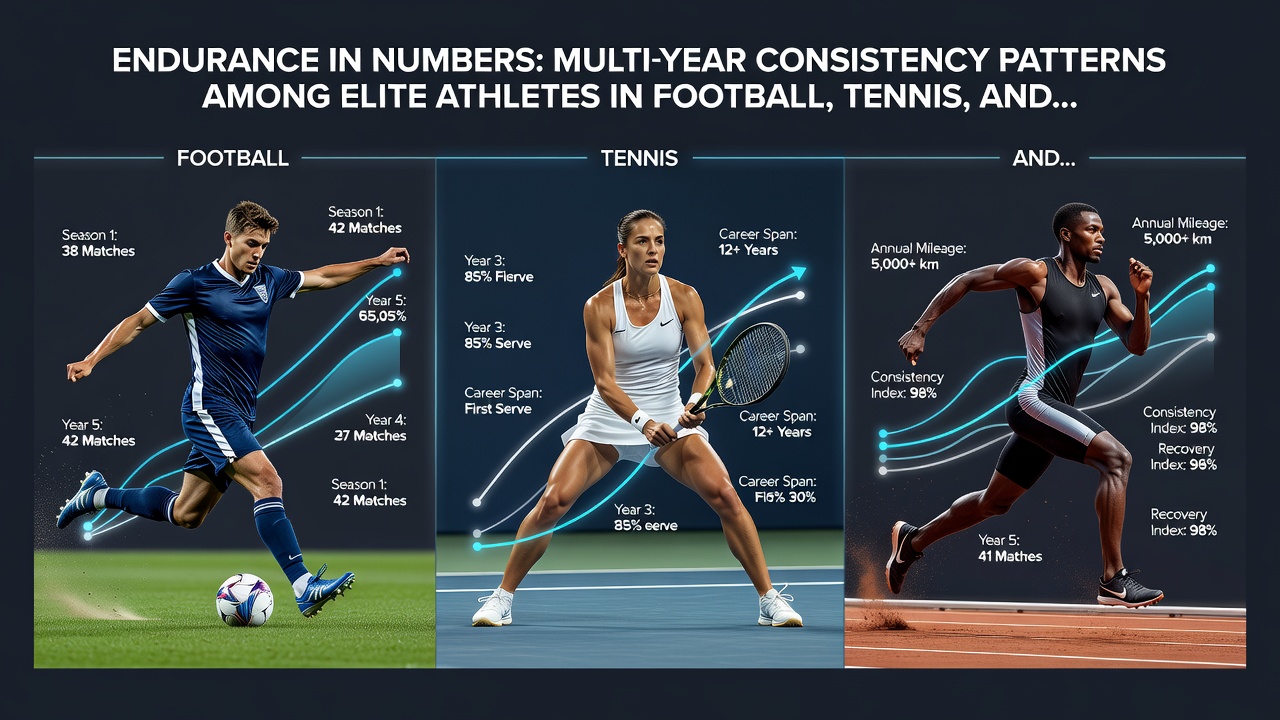
Golf performance analysts compile strokes-gained statistics and finish-position averages across PGA, DP World, and LIV events, and these numbers point to competitors who post top-20 results in at least half of their starts over consecutive seasons. Official tour databases show that driving accuracy combined with putting performance on specific grass types correlates with longer streaks of earnings above career medians. Records through June 2026 indicate several players whose scoring averages have remained within one stroke of their personal benchmarks across four or five campaigns, even as equipment regulations and course setups evolve.
Cross-Sport Comparisons and Shared Factors
Comparative reviews conducted by sports science groups note that recovery protocols and load-management strategies appear in all three disciplines, although the implementation differs because of fixture density in football, travel demands in tennis, and weather-related scheduling in golf. Academic papers from institutions in North America and Europe have cross-referenced biometric and workload datasets, revealing that athletes who maintain stable training volumes across off-seasons tend to exhibit narrower variance in key performance indicators. One analysis of European football academies and Australian tennis development programs found overlapping patterns where early-career consistency predicted longer professional tenures when medical and coaching support remained constant.
Data Sources and Measurement Approaches
Statistical agencies affiliated with FIFA and regional golf federations publish annual consistency indices that weight results by opponent strength and event prestige, while tennis governing bodies release similar longitudinal reports. These frameworks allow observers to isolate variables such as age curves, injury history, and schedule intensity, producing comparable rankings across sports. Government-supported research centers in Canada and the United Kingdom have contributed independent validation studies that confirm the reliability of these indices when applied to large player cohorts.
Conclusion
Records spanning multiple seasons in football, tennis, and golf circuits continue to illustrate measurable consistency patterns that researchers quantify through standardized metrics, and these datasets provide ongoing material for performance modeling as competitions progress into future cycles.