20 Jun 2026
Daylight and Artificial Illumination Shape Performance Metrics in Professional Sports Leagues
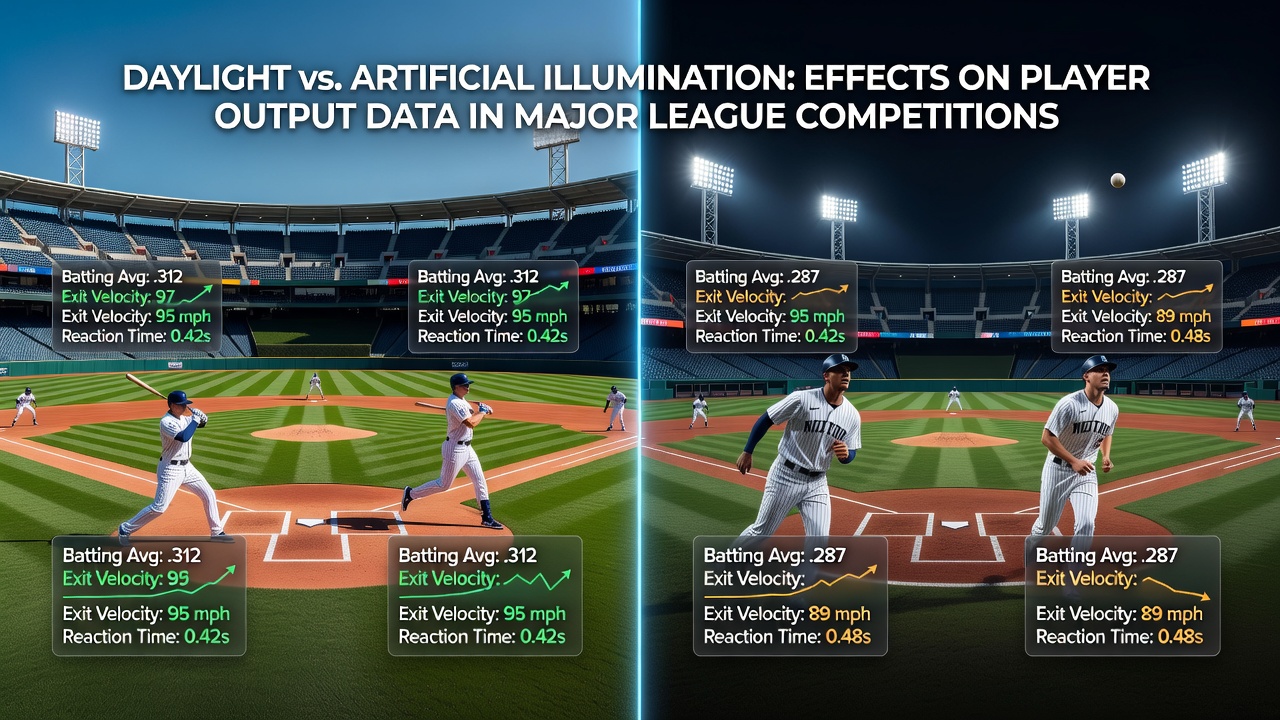
Lighting conditions play a measurable role in how athletes perform across major leagues, and researchers tracking output data have documented consistent patterns in scoring, error rates, and endurance markers depending on whether games occur under natural daylight or artificial illumination. Studies from multiple sports indicate that visibility differences, circadian rhythm alignment, and light spectrum variations correlate with shifts in player statistics, particularly when comparing daytime fixtures to night contests under floodlights.
Outdoor Sports and Natural Light Advantages
Baseball provides one clear arena where daylight data stands out, as day games in Major League Baseball show higher batting averages and lower strikeout totals compared to evening matchups under artificial lights, according to league-wide historical records spanning decades. Pitchers also post elevated earned run averages after sunset, a trend observers link to reduced depth perception and ball spin visibility when stadium lighting dominates. Soccer matches follow similar lines, with European leagues reporting elevated goal tallies in afternoon fixtures versus those starting after dark, while player tracking systems reveal increased sprint distances covered before twilight sets in.
Analyses of National Football League contests further highlight these distinctions, since afternoon games yield higher completion percentages for quarterbacks and fewer dropped passes overall, whereas prime-time contests under bright overhead arrays correlate with modest rises in penalty counts tied to footing adjustments. Data collected through June 2026 continues to reinforce these seasonal splits across outdoor venues where teams alternate between sunlight and mixed or fully artificial conditions.
Indoor Leagues and Controlled Artificial Lighting
Basketball and hockey present different dynamics because most competitions unfold entirely under artificial systems, yet output variations still emerge when venues switch between older metal halide fixtures and modern LED arrays. National Basketball Association figures show improved three-point shooting percentages in arenas using full-spectrum LEDs that more closely mimic daylight, while older lighting setups associate with slight dips in free-throw accuracy during later quarters. National Hockey League tracking similarly notes higher shot volumes and fewer turnovers in facilities equipped with high-intensity LED banks, suggesting faster puck tracking and reduced visual fatigue.
Researchers at institutions such as the University of Queensland have examined how light color temperature influences reaction times, revealing measurable gains when illumination approaches natural daylight Kelvin ranges. These indoor findings complement outdoor patterns and help explain why some franchises schedule practice sessions under simulated daylight spectra to maintain consistent performance baselines.
Comparative Data Across Leagues and Time Periods
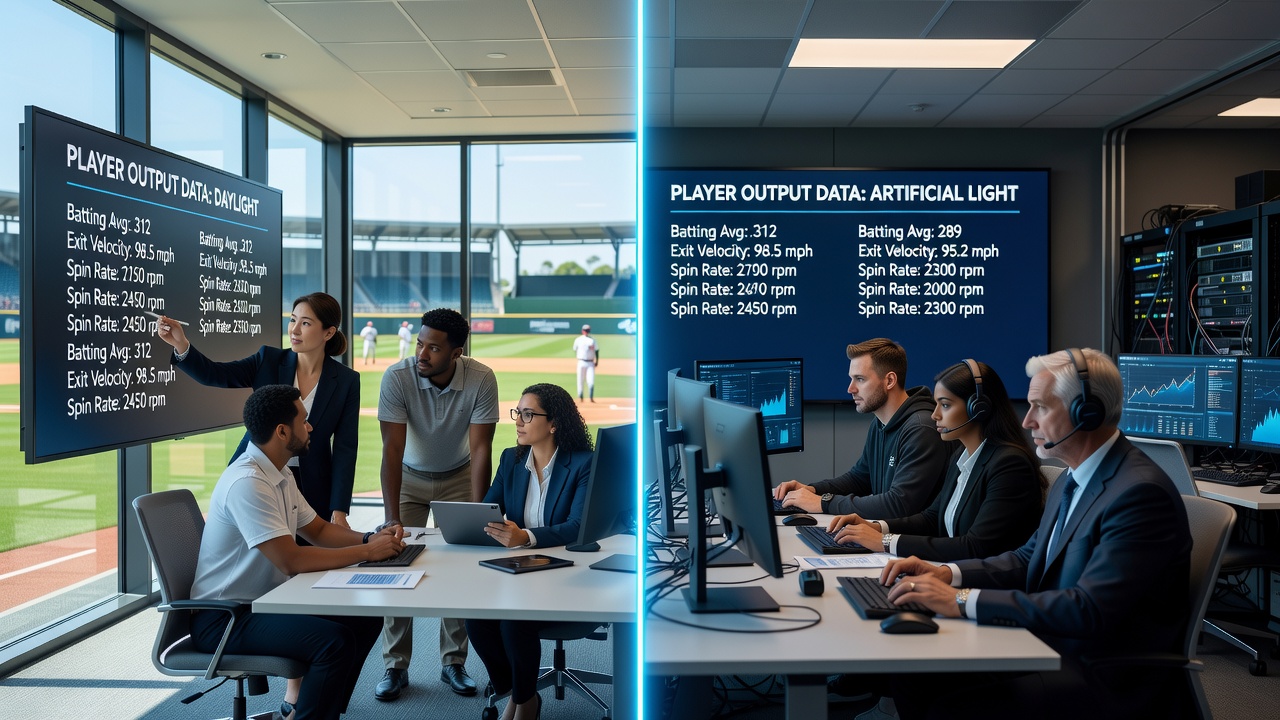
Cross-sport comparisons reveal that daylight conditions often favor precision-based actions such as shooting, passing accuracy, and hitting, whereas artificial lighting can introduce subtle delays in visual processing that accumulate over long contests. Major League Soccer data sets demonstrate elevated assist numbers during daytime matches, while evening games under lights show increased physical duels and fouls, patterns echoed in Canadian Premier League reports. International studies compiled by groups including the International Platform on Sport and Development further indicate that recovery metrics, including sleep quality following night games, influence next-day output when travel and lighting combine as stressors.
Longitudinal tracking through wearable devices has allowed analysts to isolate illumination as one variable among many, confirming that players accumulate higher heart-rate loads under artificial lights during equivalent workloads. These observations hold across baseball, football, basketball, and soccer circuits, providing teams with scheduling considerations that extend beyond traditional rest and travel factors.
Technological Shifts and Future Tracking
Advances in lighting technology continue to narrow gaps between natural and artificial environments, as newer LED systems adjust dynamically to replicate daylight progression throughout evening events. Leagues experimenting with tunable fixtures report incremental improvements in player comfort scores and reduced complaint rates regarding glare or shadows. Performance databases maintained by individual organizations now incorporate lighting metadata alongside traditional stats, enabling finer-grained correlations that were unavailable even five years ago.
June 2026 marks another cycle of updated reports from multiple leagues, where integrated sensor data further refines understanding of how spectrum and intensity interact with athlete physiology during extended seasons. Continued refinement of these datasets supports evidence-based adjustments to game timing and venue design without altering core competitive structures.
Conclusion
Evidence from professional leagues demonstrates clear linkages between illumination type and measurable player output across sports, with daylight generally supporting precision metrics and artificial systems showing variable effects depending on technology and spectrum quality. Ongoing data collection through established tracking methods ensures these relationships remain quantifiable, guiding operational decisions while preserving the integrity of competition records.