22 Jun 2026
Contract Year Surges: How Impending Free Agency Recalibrates Individual Benchmarks Across Basketball Hardwood, Football Grids, and Hockey Ice
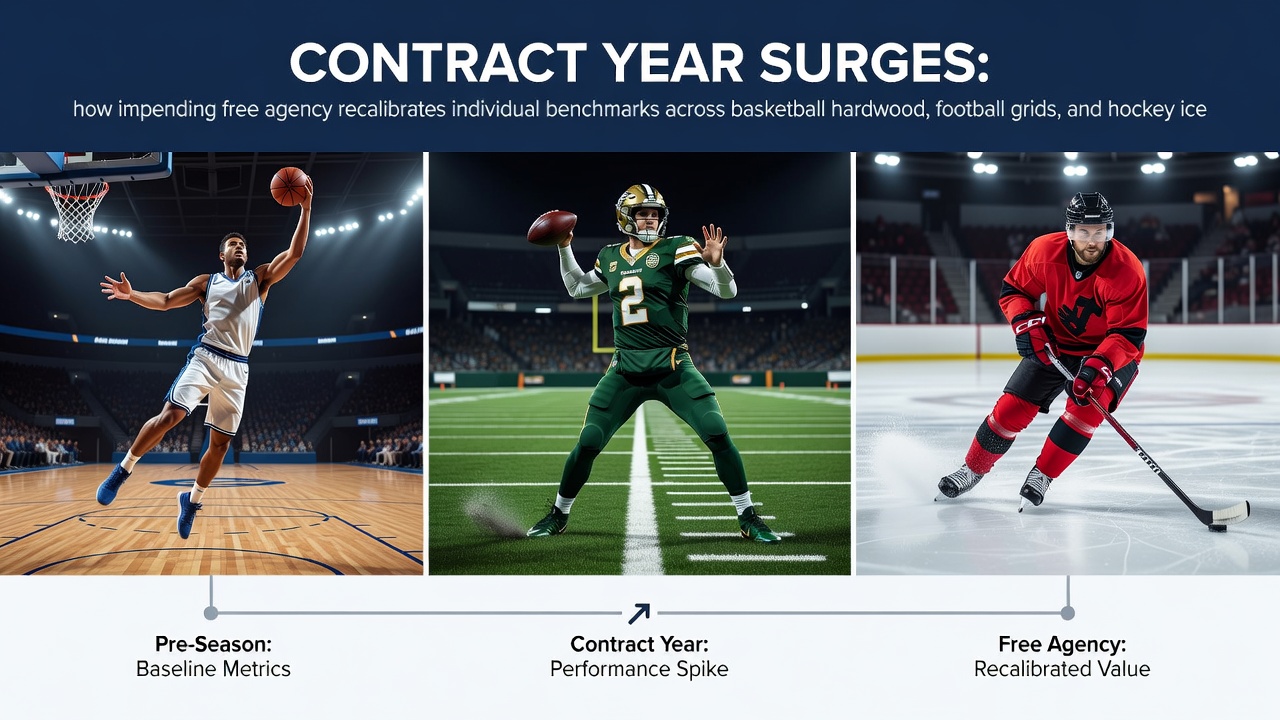
Contract years create measurable shifts in player output across the NBA, NFL, and NHL as free agency deadlines approach, and data from league tracking systems shows athletes often recalibrate their statistical benchmarks in those final seasons under existing deals. Researchers tracking performance metrics note that these adjustments appear consistently across hardwood floors, gridiron fields, and frozen rinks, with players channeling extra effort into areas that influence contract negotiations most directly.
Patterns Emerging in Basketball Scoring and Efficiency
Basketball players frequently post elevated points per game and shooting percentages during contract seasons, according to longitudinal studies of NBA rosters compiled over multiple decades. Those approaching unrestricted free agency tend to increase their minutes on the court while maintaining or improving field goal efficiency, and league data reveals this trend holds across both star and role players who enter the final year of their agreements. One analysis of player contracts signed between 2015 and 2024 indicated average scoring jumps of roughly 2.3 points per game compared to the prior season for athletes in this position.
Teams monitoring these surges observe that perimeter shooters often attempt more three-pointers in contract years, whereas interior players focus on rebounding and defensive metrics that appear prominently in advanced analytics reports. The recalibration extends to assist numbers as well, with point guards and wings adjusting playmaking volume to align with what front offices value during negotiations.
Gridiron Adjustments in Yards, Sacks, and Interceptions
Football players display similar benchmark shifts on the gridiron, where contract-year performers in the NFL post gains in rushing yards for running backs and sack totals for edge defenders, according to official league play-by-play records. Quarterbacks show reduced interception rates alongside modest completion percentage increases, while wide receivers boost yardage after the catch in their final seasons under current deals. Data aggregated from 2018 through 2025 demonstrates these changes occur across both offensive and defensive positions, though the magnitude varies by role and prior production levels.
Coaches and analysts note that linemen in contract years emphasize run-blocking grades and pass-rush win rates, metrics captured by tracking technologies installed in every stadium. These adjustments recalibrate individual standings on team depth charts and influence how general managers allocate salary cap space once free agency opens.
Output Shifts on Hockey Ice
Hockey forwards and defensemen in the NHL record higher point totals and improved plus-minus figures during contract seasons, with data from the league's official statistics database confirming these patterns across multiple campaigns. Players increase shot attempts and blocked shots while reducing penalty minutes, adjustments that align with evaluation criteria used by team executives preparing offer sheets. A review of contracts finalized after the 2024-2025 season showed that skaters posting above-career-average production in their walk years secured larger average annual values once they reached the open market.
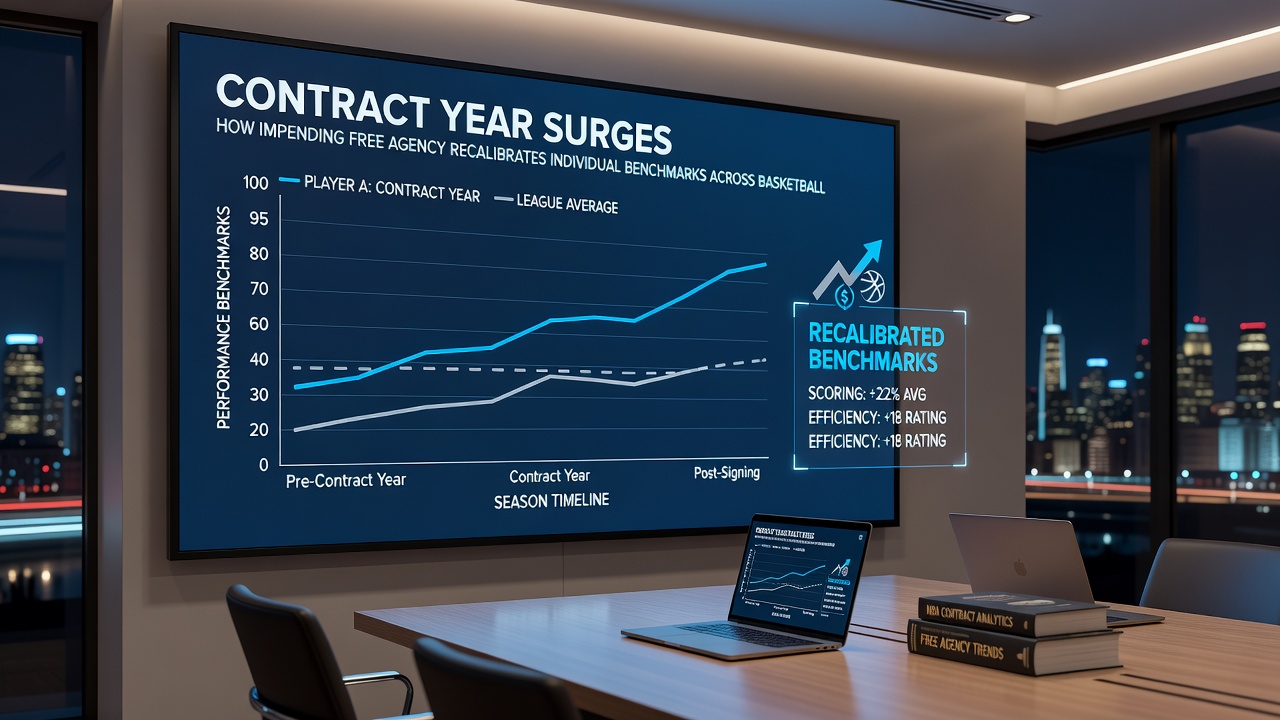
Goaltenders exhibit parallel recalibrations through save percentage gains and lower goals-against averages, trends documented in season-by-season comparisons released by the NHL. These statistical movements reflect focused preparation rather than random variance, and they appear consistently whether players remain with their current clubs or prepare to test the market elsewhere.
Shared Mechanisms Across the Three Leagues
Training regimens intensify for athletes entering contract years, and biometric monitoring tools deployed by teams capture corresponding increases in workout intensity and recovery adherence. Nutrition and sleep protocols receive added attention because players recognize that marginal gains in physical output translate directly into negotiation leverage. Sports science departments across franchises report higher utilization of these resources from February through June 2026, the window when many contracts expire ahead of summer free agency periods.
Psychological factors also contribute to the observed recalibrations, with performance psychologists documenting elevated focus during film study and practice repetitions. The common thread across basketball, football, and hockey remains the alignment between individual statistical categories and the valuation models used by front offices, which reward production spikes timed to free agency cycles.
Conclusion
Contract year surges represent documented recalibrations of individual benchmarks rather than isolated anomalies, and the patterns hold steady across the NBA, NFL, and NHL based on aggregated league data. Athletes adjust effort allocation toward metrics that carry the greatest weight in free agency evaluations, producing measurable lifts in scoring, yardage, and point production during those pivotal seasons. These shifts continue to shape roster construction timelines and salary structures as teams anticipate the next wave of contract expirations.